China (summer 2025)
2025-09-21
The summer of 2025 was the summer between my graduation from Stanford and the start of my PhD at Penn. Jasper and I spent June in mainland China: We lived with my uncle in Shenzhen for two weeks while I traveled back and forth from Hong Kong to update my long-expired travel documents, then the next two weeks we stayed in Chengdu with my grandparents (Calder joined us here), and I did a quick stop in Beijing to see friends before flying to Japan. It was the longest I had stayed in mainland China since leaving for high school, and along with the lurking theme of the summer being one of ends-and-new-beginnings, it felt like I was beginning to reintegrate this very important part of me into the life I was building as adult Lian.
Our time in Shenzhen mostly consisted of working at coffee shops (me finishing some final projects, as I left two weeks before the school year officially ended), complaining about the terrible tropical heat and humidity, and eating. Some of the food highlights were the 大红袍脆皮乳鸽, a Hunanese white pepper dish, and a 潮汕-style clay pot fish. I was in general just happy with cheap food, fish, good peppers, and bamboo shoots.
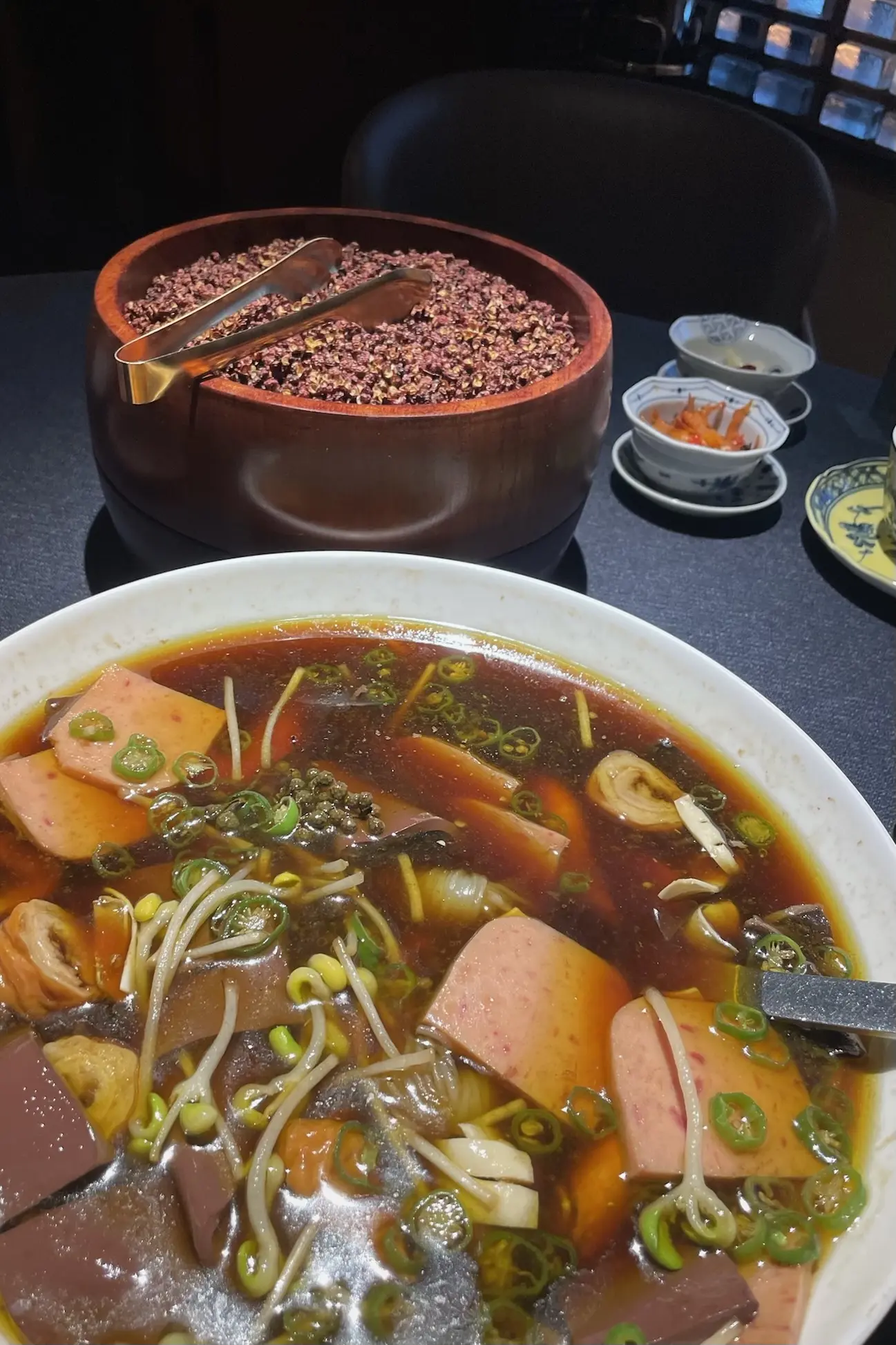
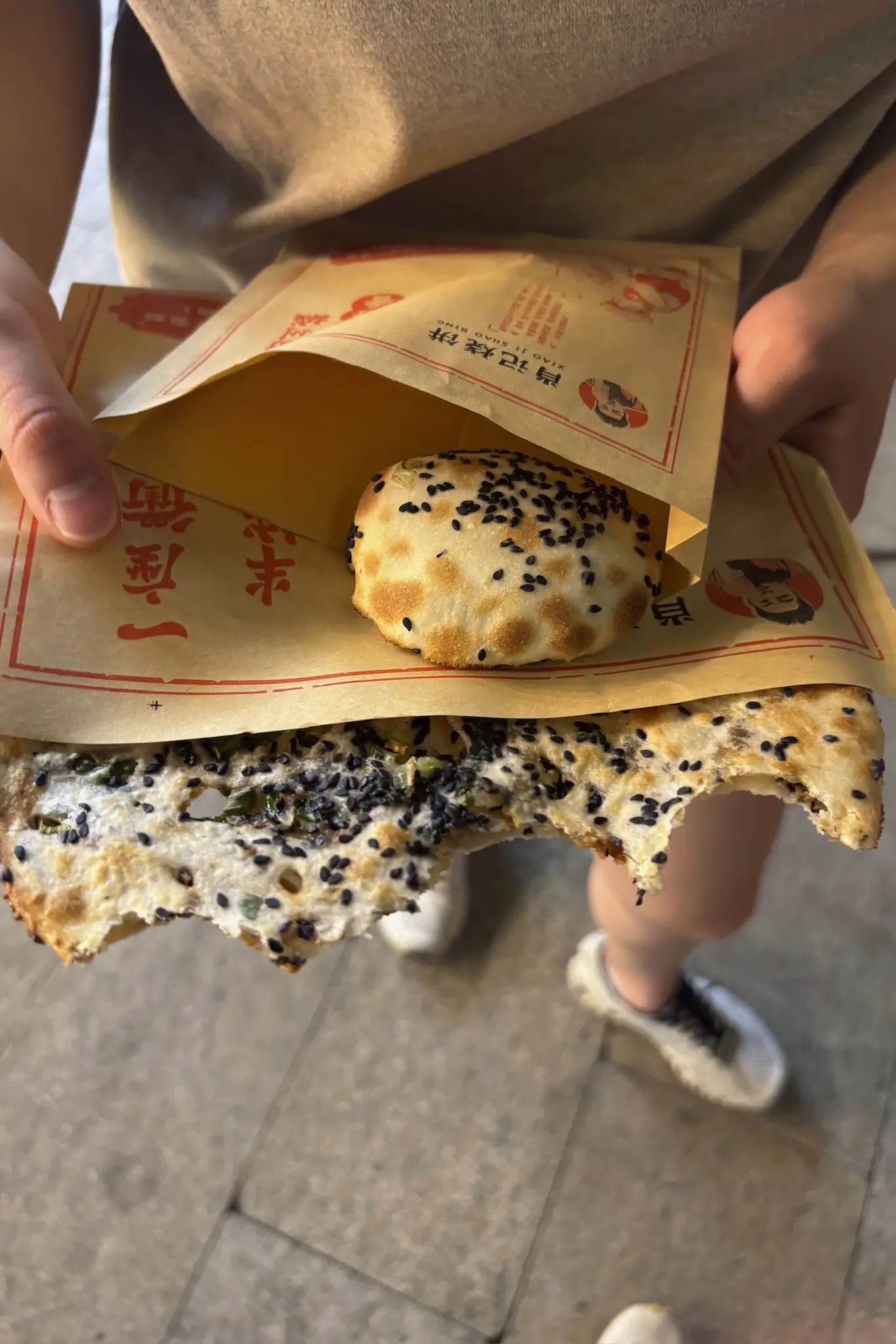
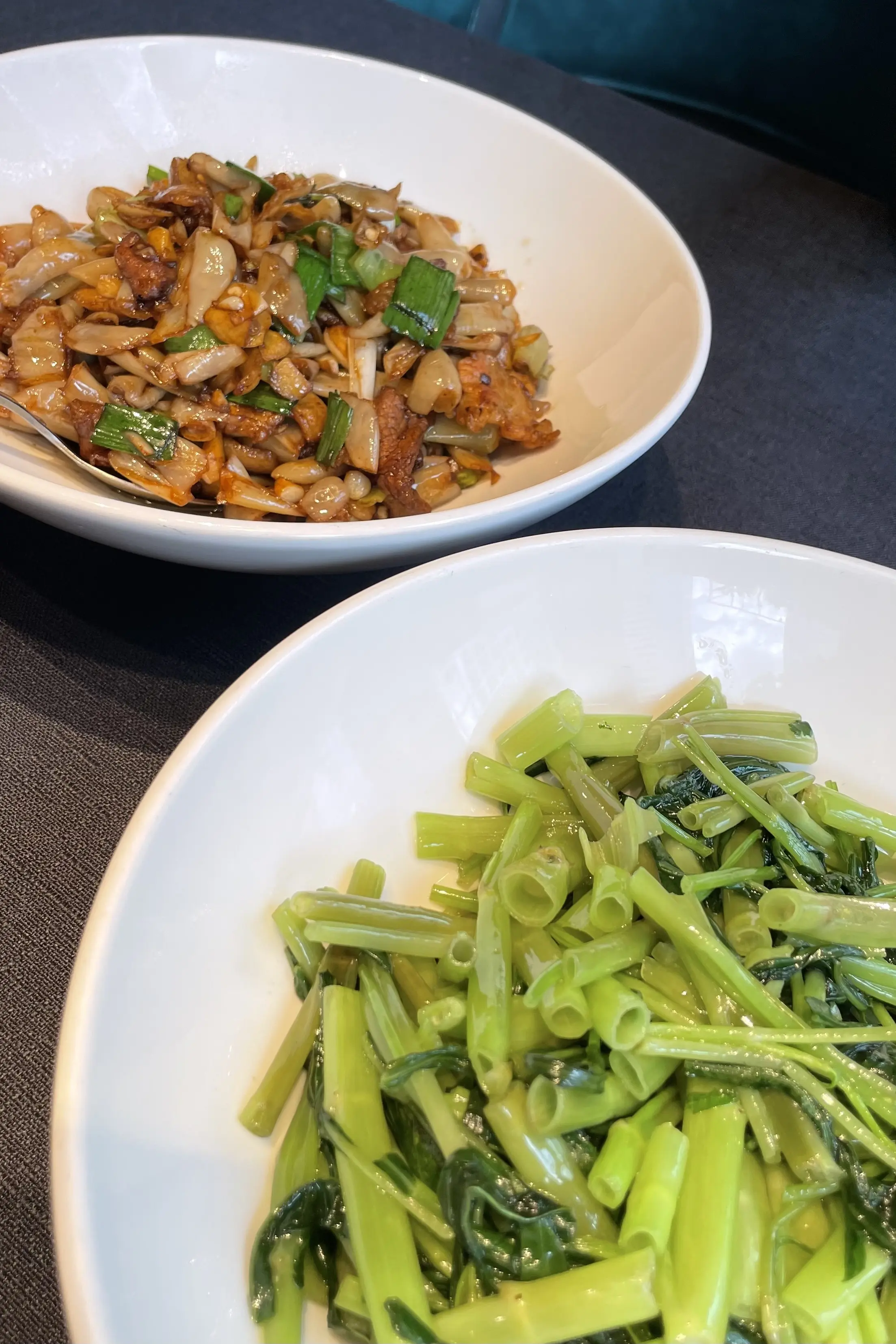
毛血旺 and 大红袍乳鸽 at 喜公馆, 肖记烧饼, and 白辣椒炒肉 at 野·湖南
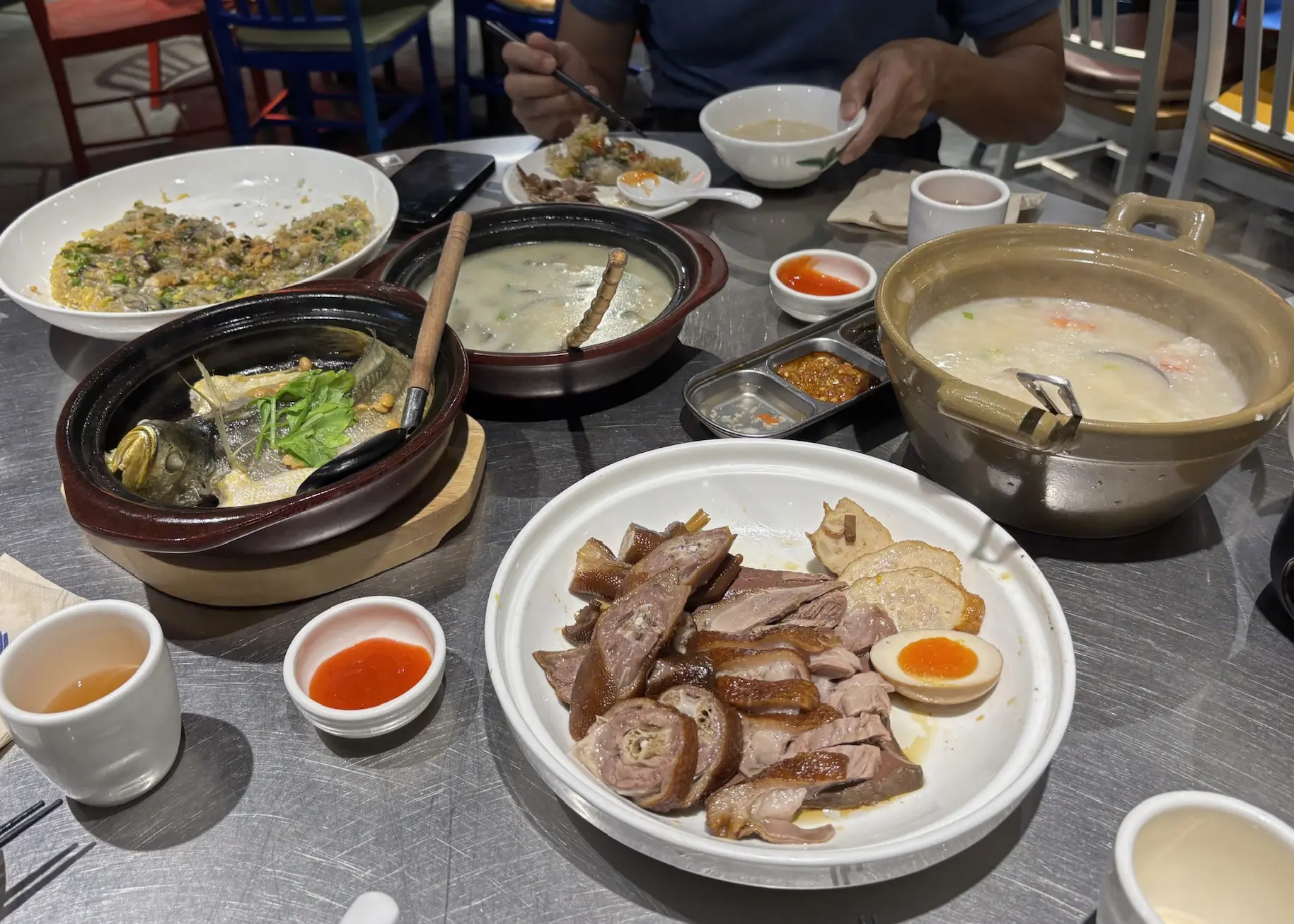
卤鹅五拼, 海鲜粥, 蚝仔烙, 某种蚝汤, and 某种很好吃的鱼 at 陈鹏鹏潮汕小馆
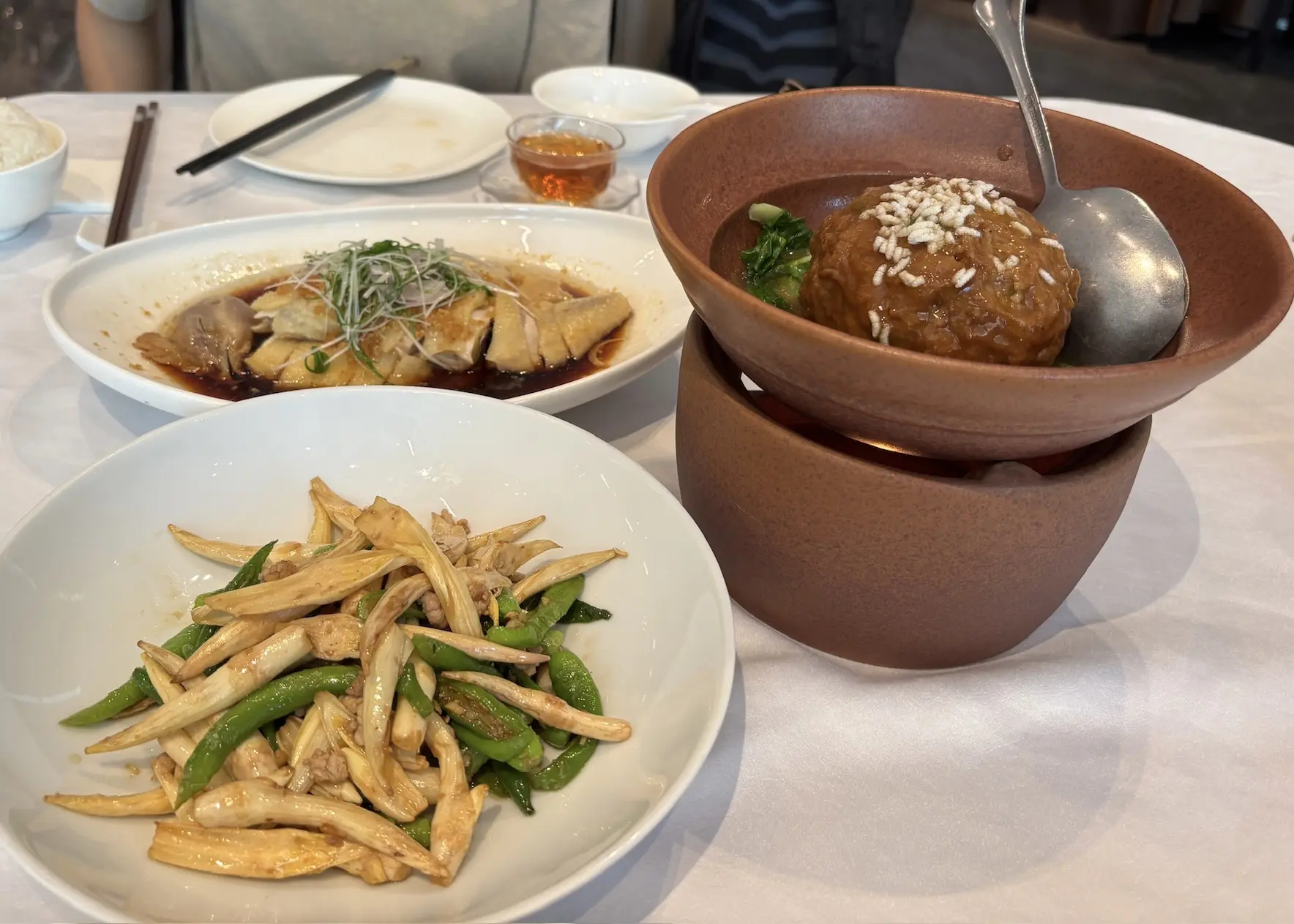
杭椒炒藕尖, 红烧狮子头, and 某种白灼鸡 at 钱塘湖
We made it to Chengdu after two weeks (once I finally got my documents sorted out). My grandparents (mom’s side) live at the edge of the college campus where they used to teach. Their apartment window overlooks the track, so a reliable source of entertainment for us was watching the various athletic activities happening below. The campus has two large lily ponds, and on sunnier days you could walk around the ponds and smell the lilies in the air. It was a very familiar smell that I had forgotten about. Our time in Chengdu was mostly: eating, walking around campus, and finding other places to walk around. A few afternoons we went to tea houses. One place had a 漳平水仙 (a Fujianese oolong) that all of us really liked, so I bit the bullet and bought a few quite expensive single-portion packs to bring home.
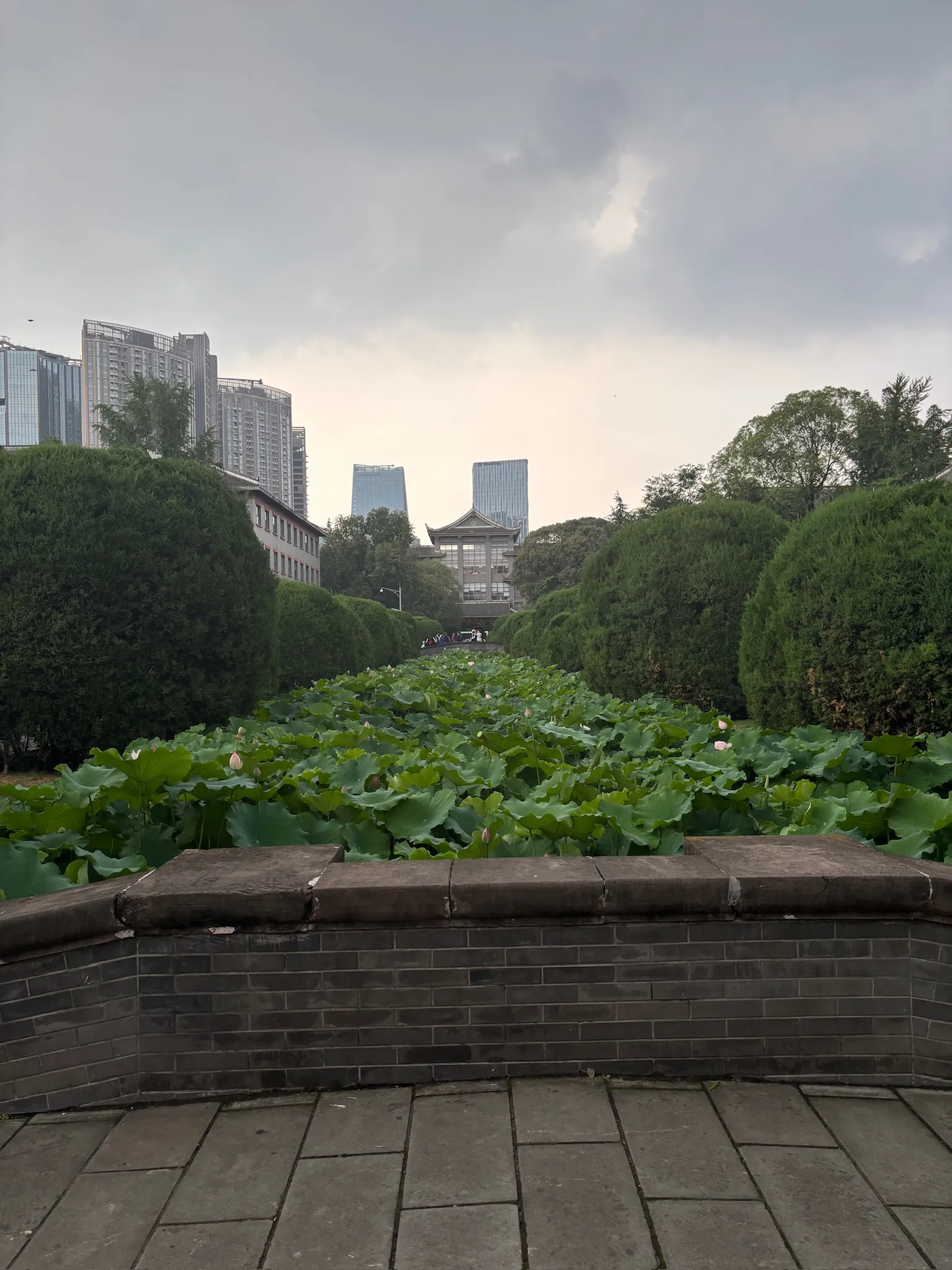
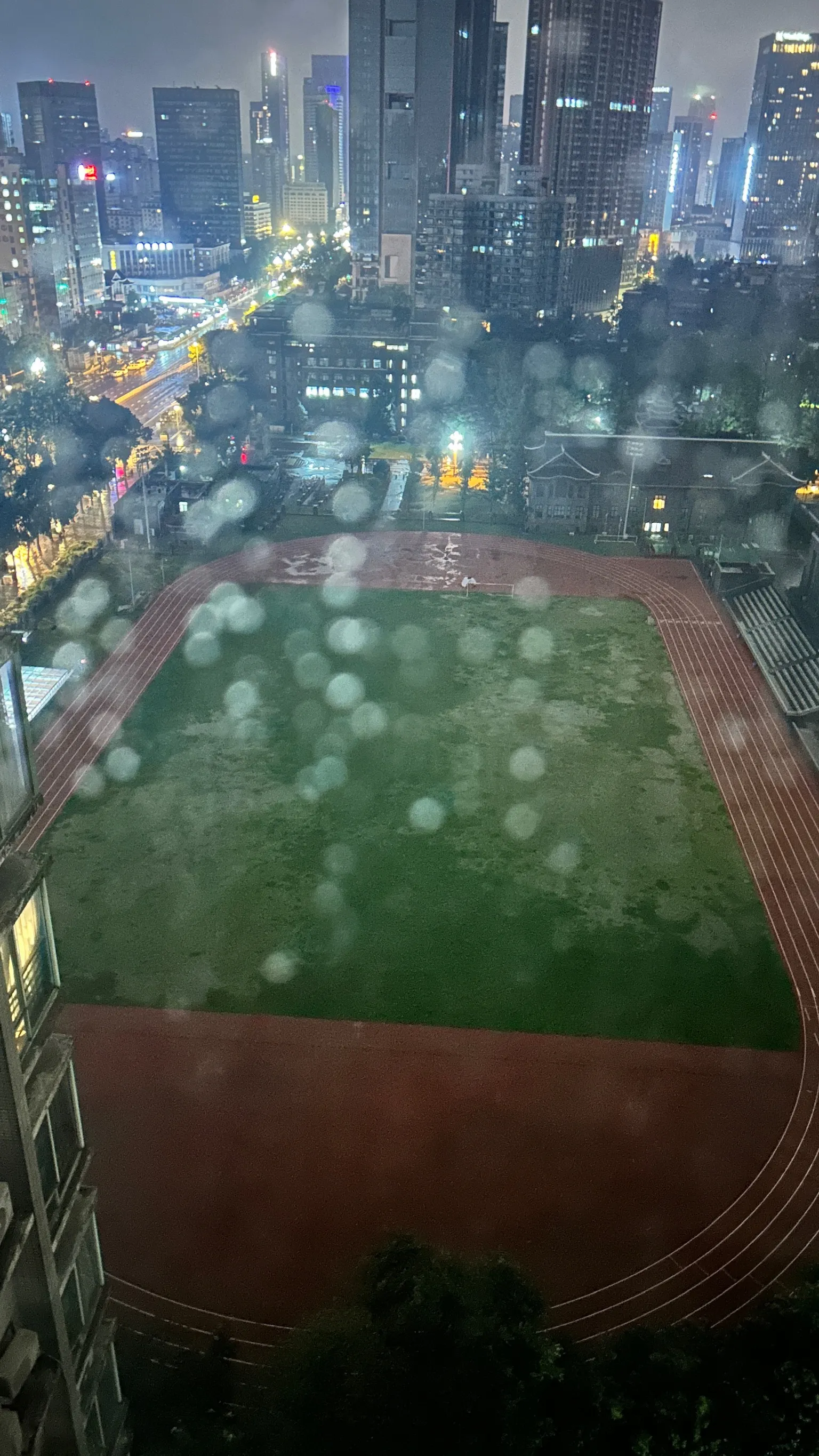
华西的荷花和跑道
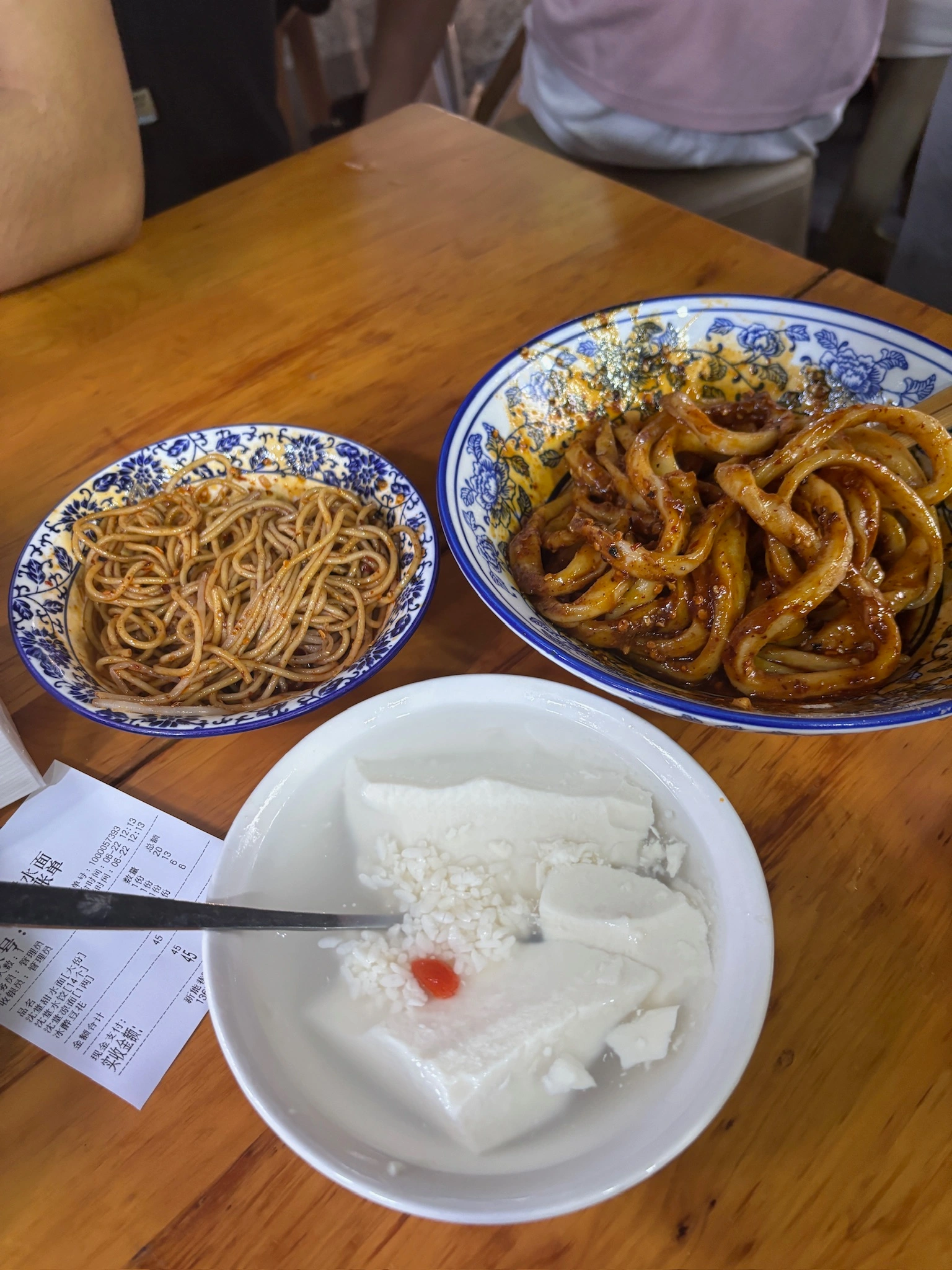
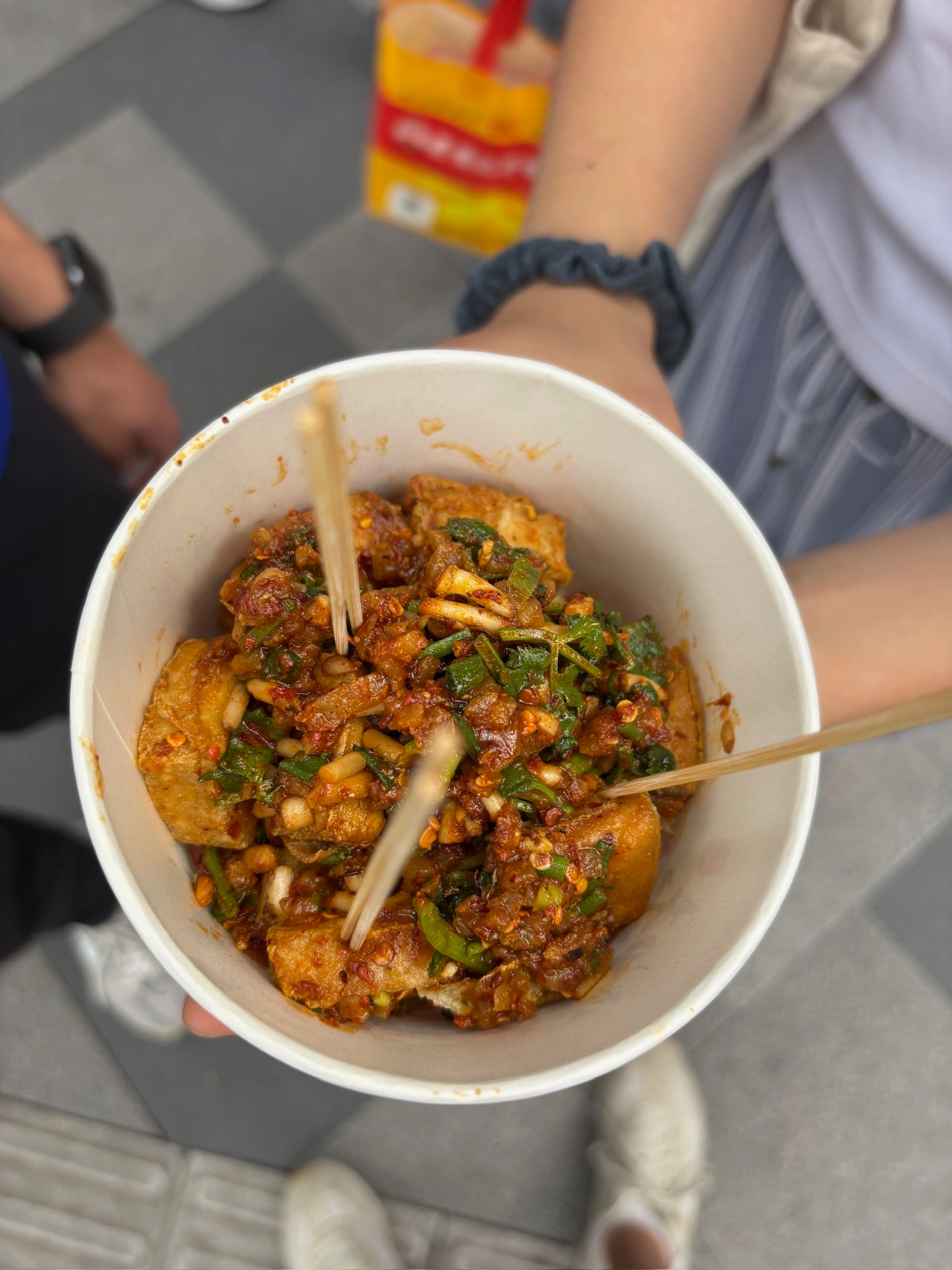
沈堂甜水面 and 毛豆腐
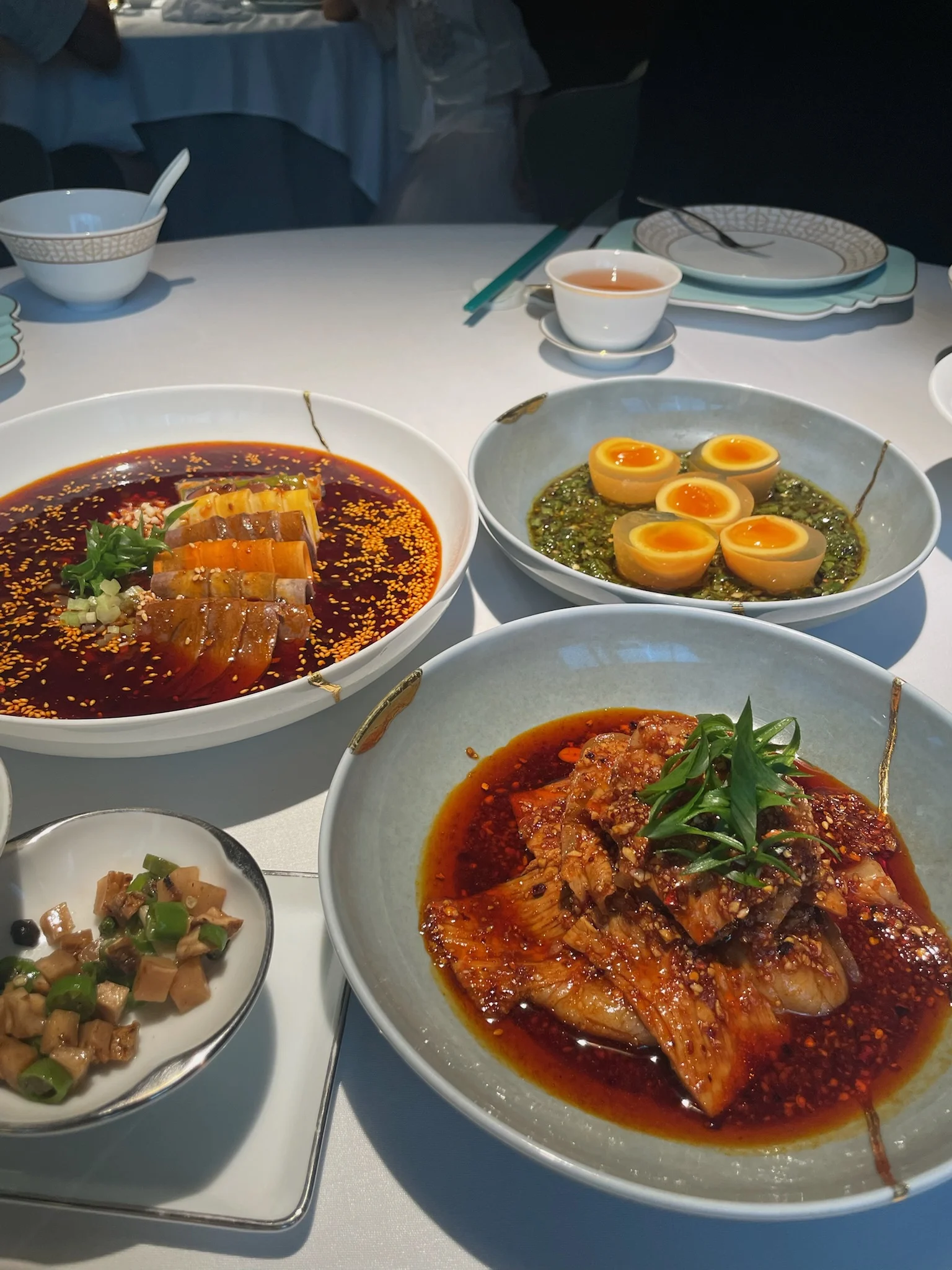
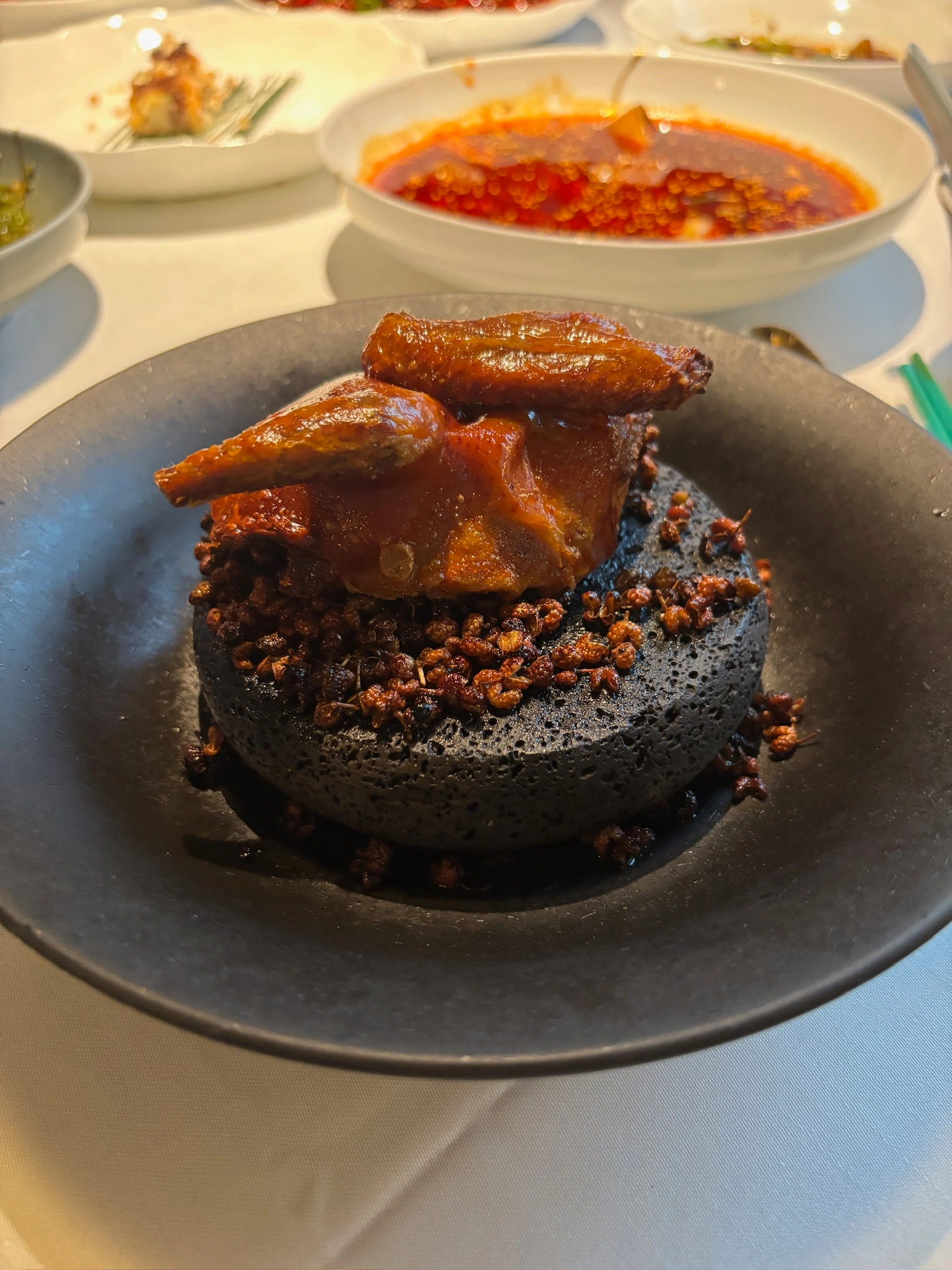
烧椒溏心皮蛋, 夫妻肺片, 蒜泥白肉 (left) and 大红袍乳鸽 (right) at 徐家菜
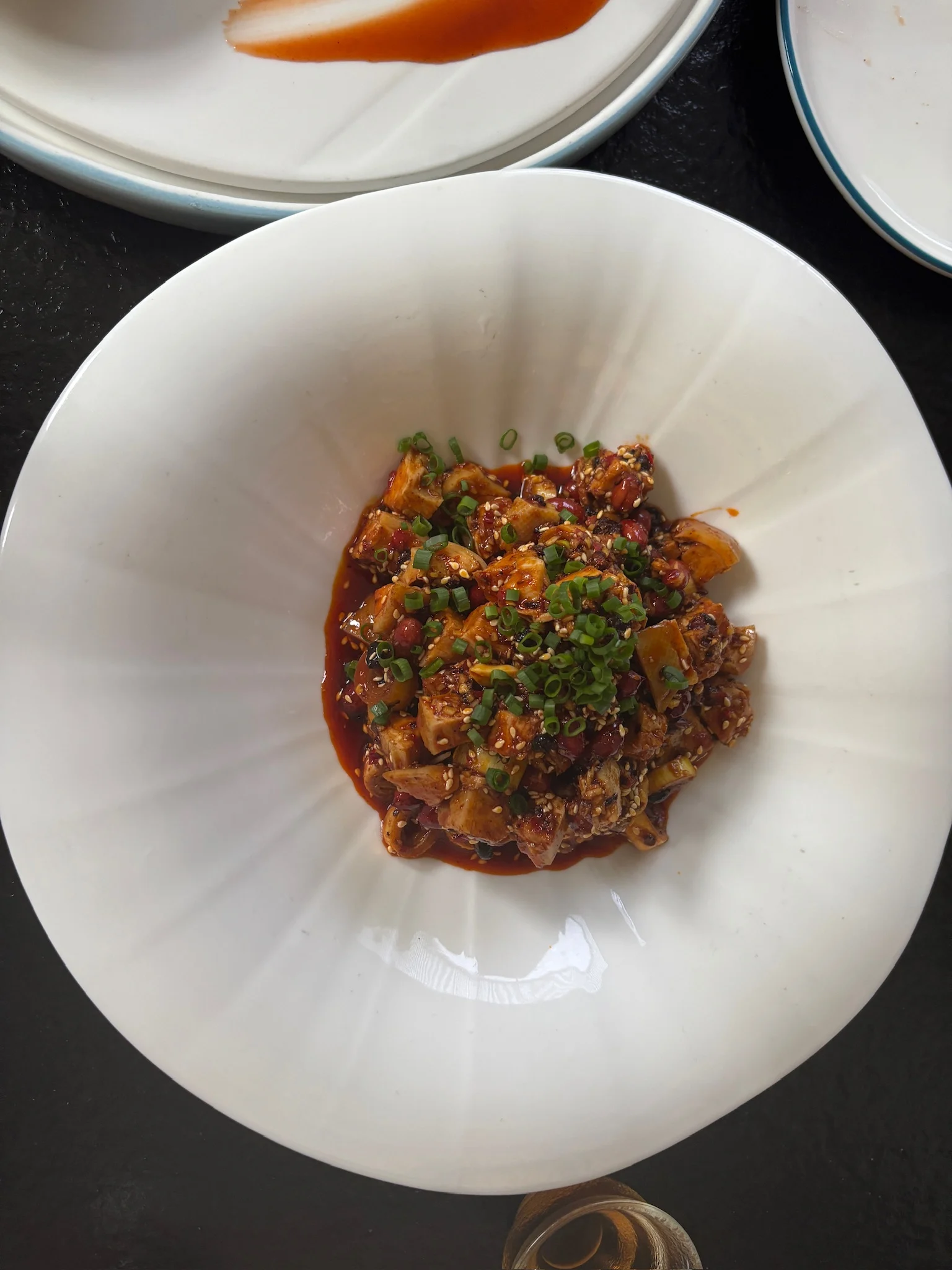
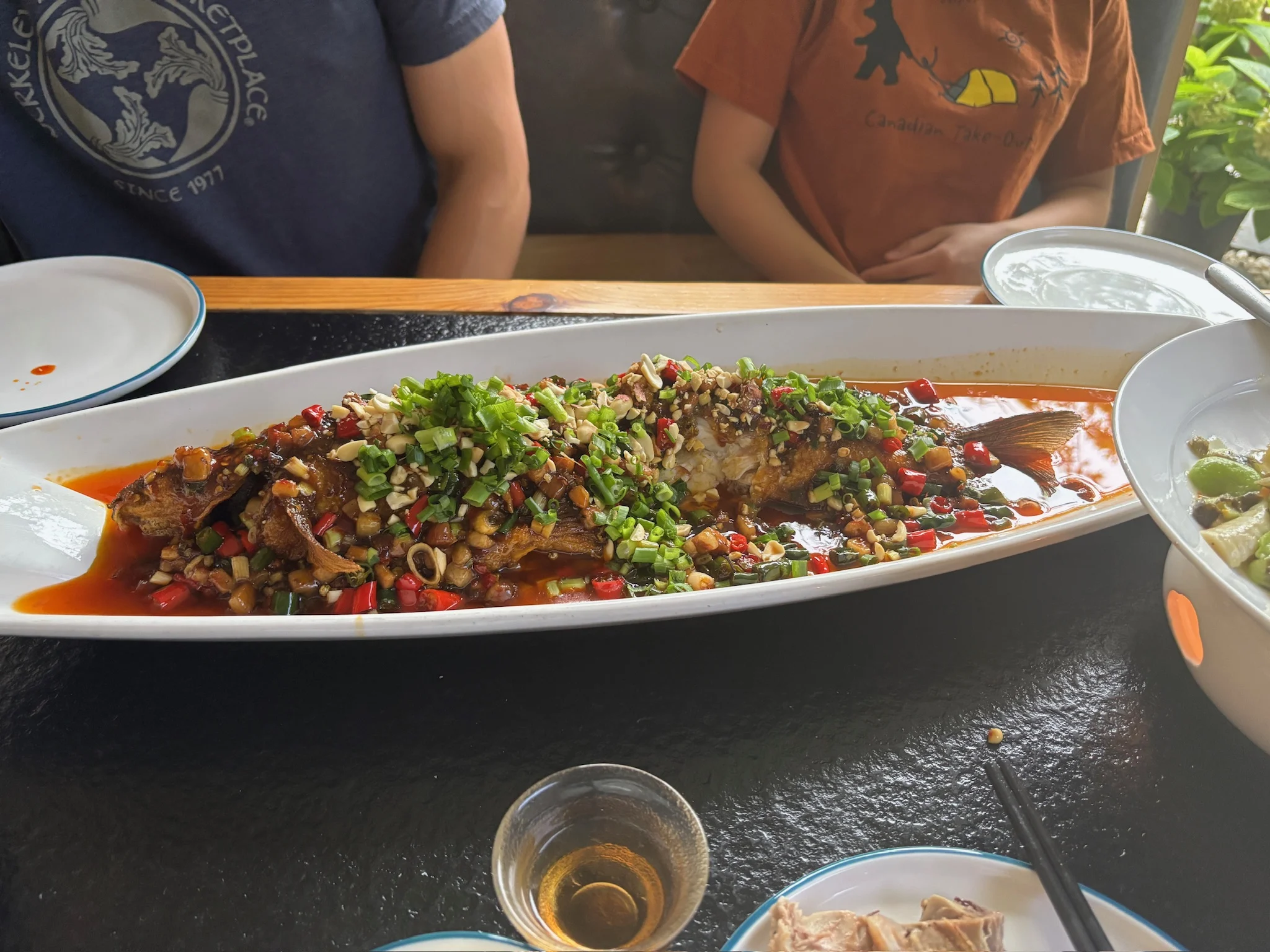
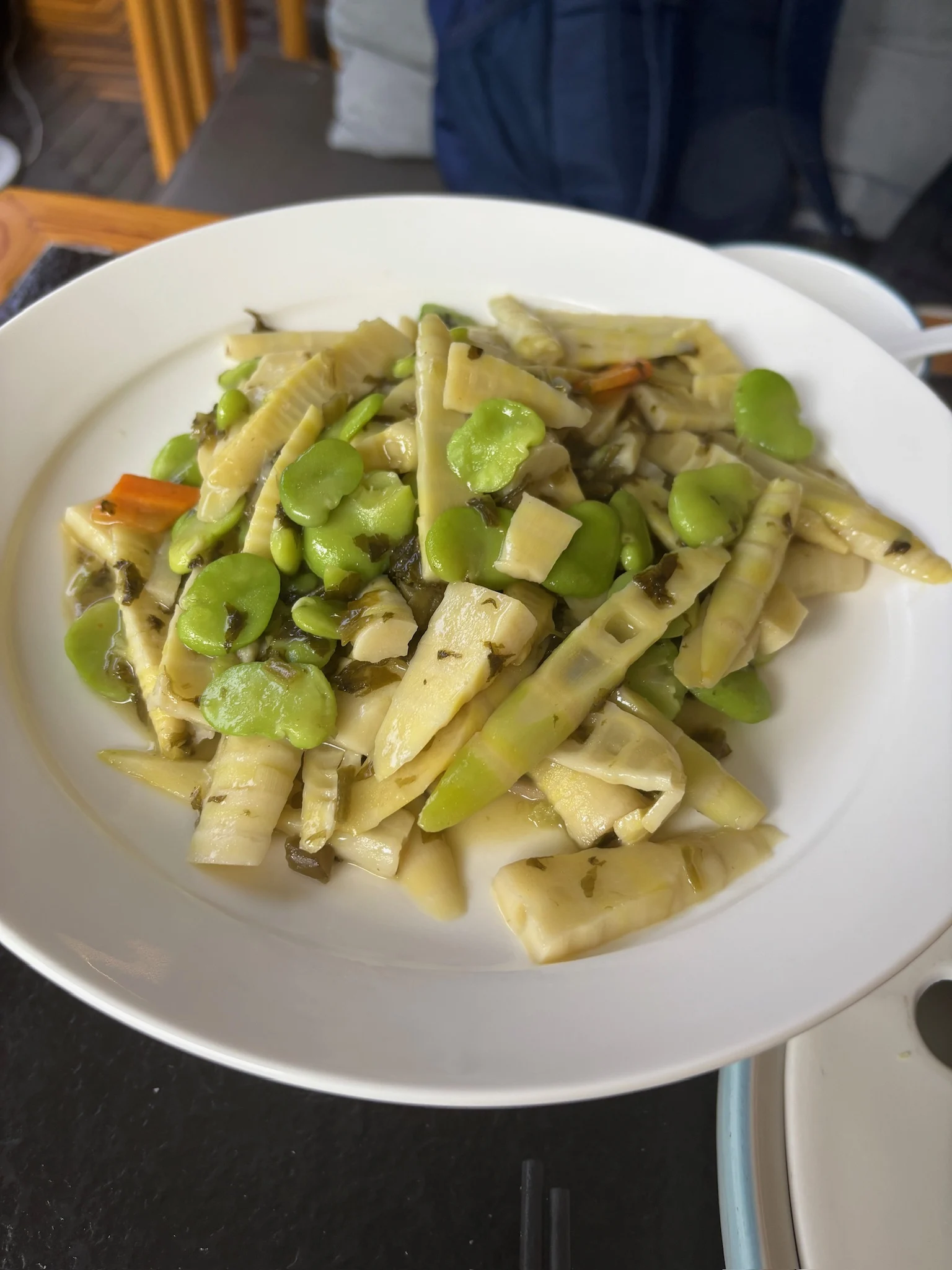
麻辣兔丁, 干烧淡水雪鱼, 笋尖 at 晶泽雅厨
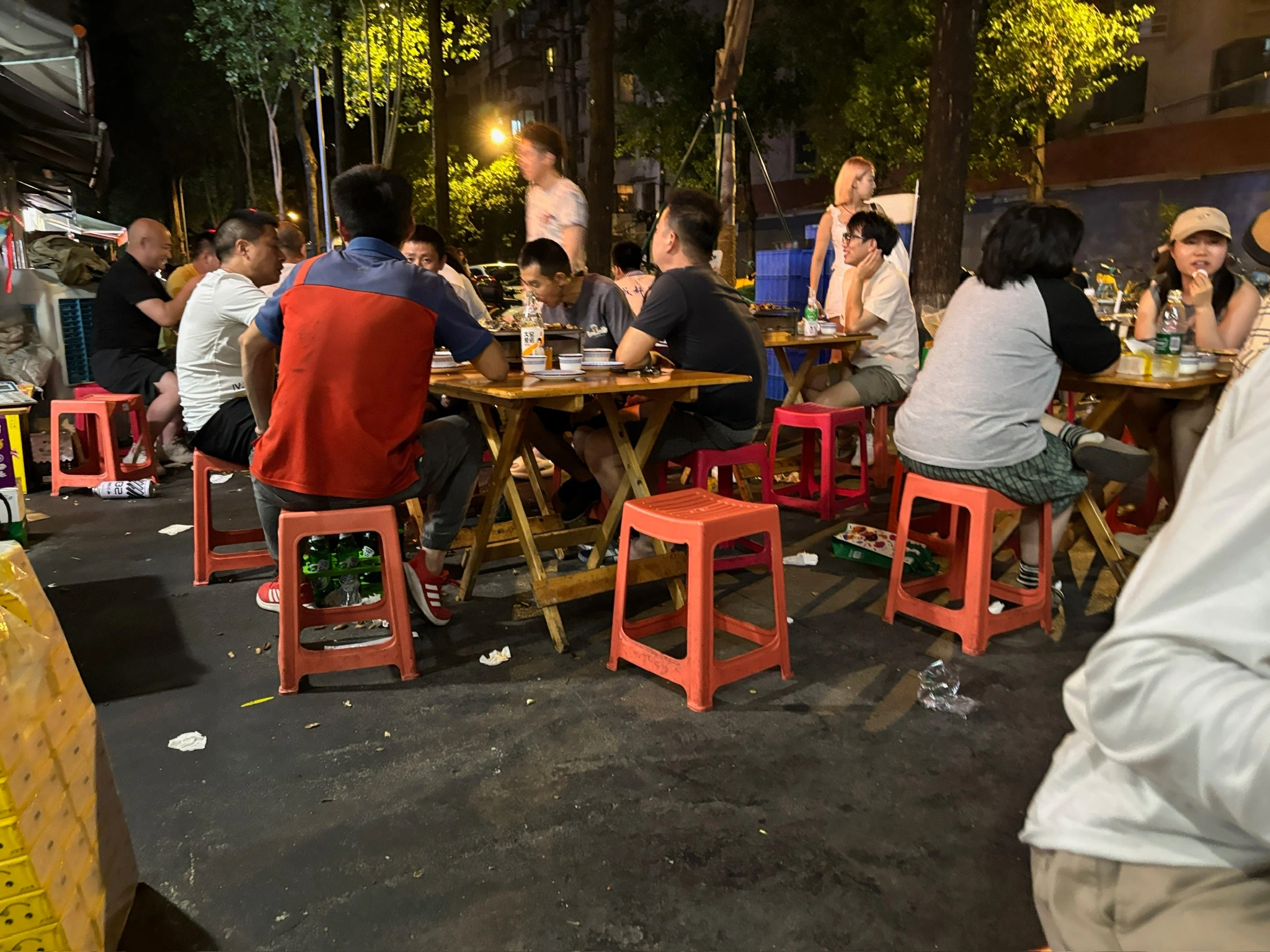
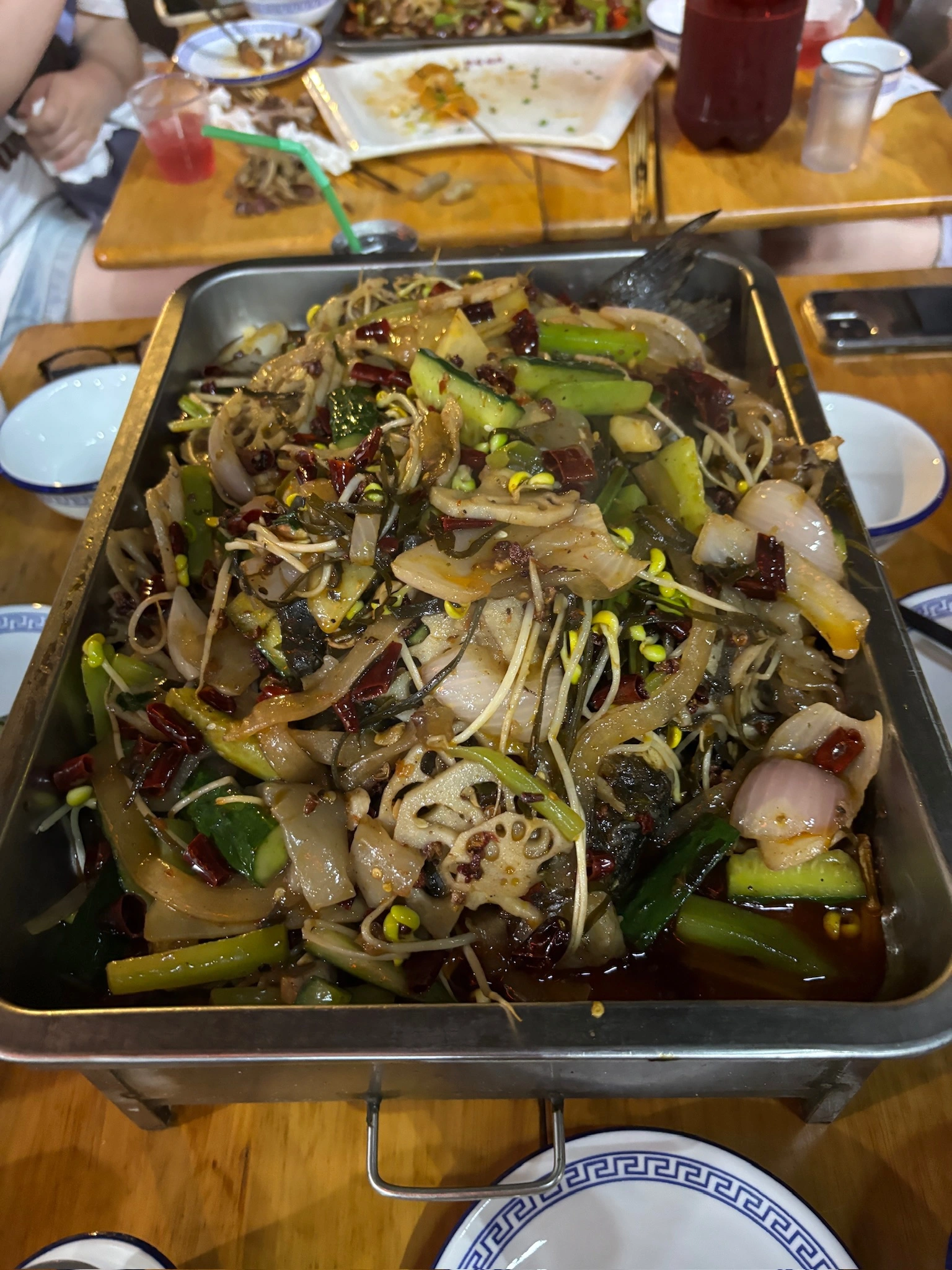
华西校园旁的万州烤鱼
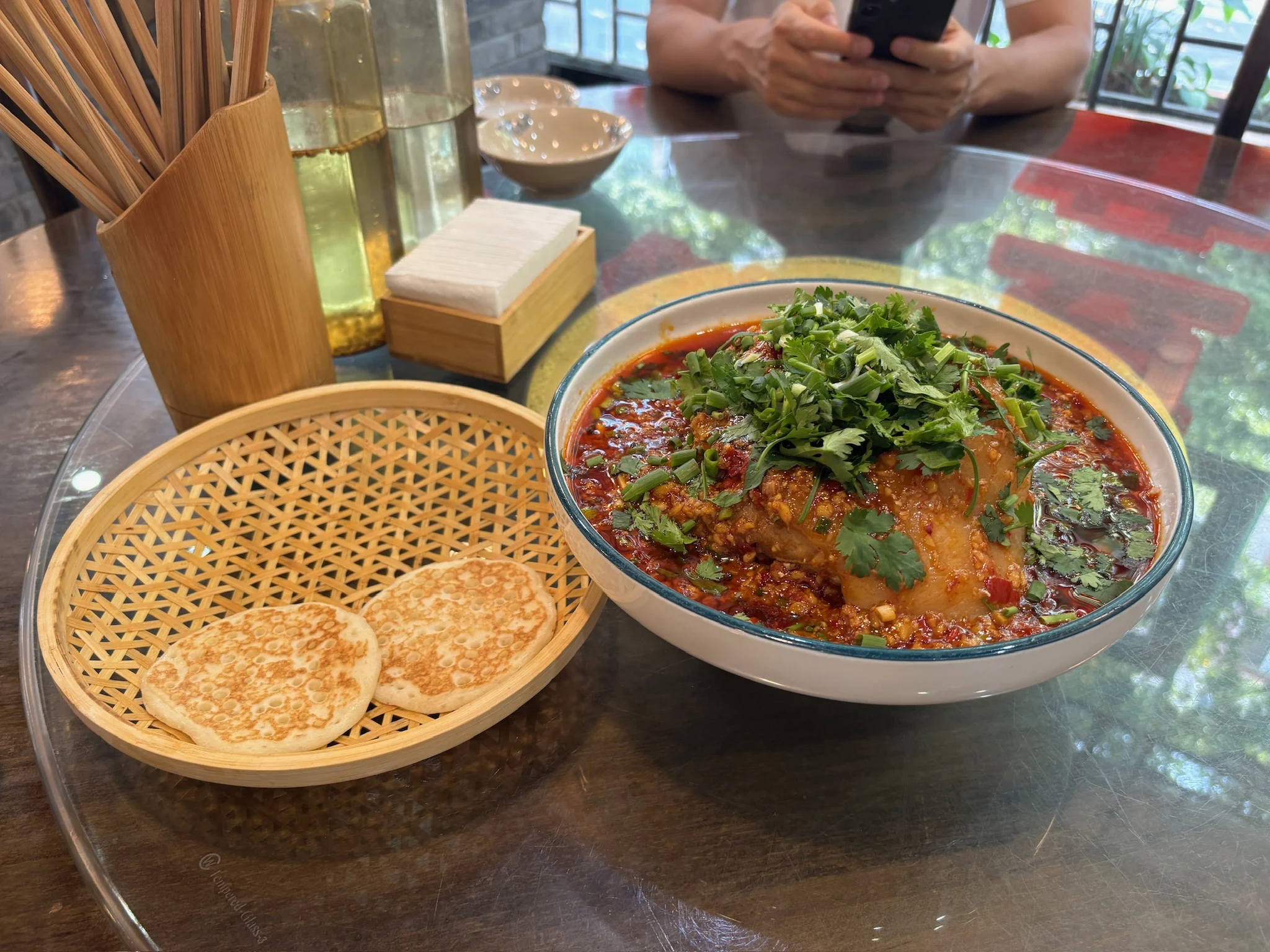
东坡肘子
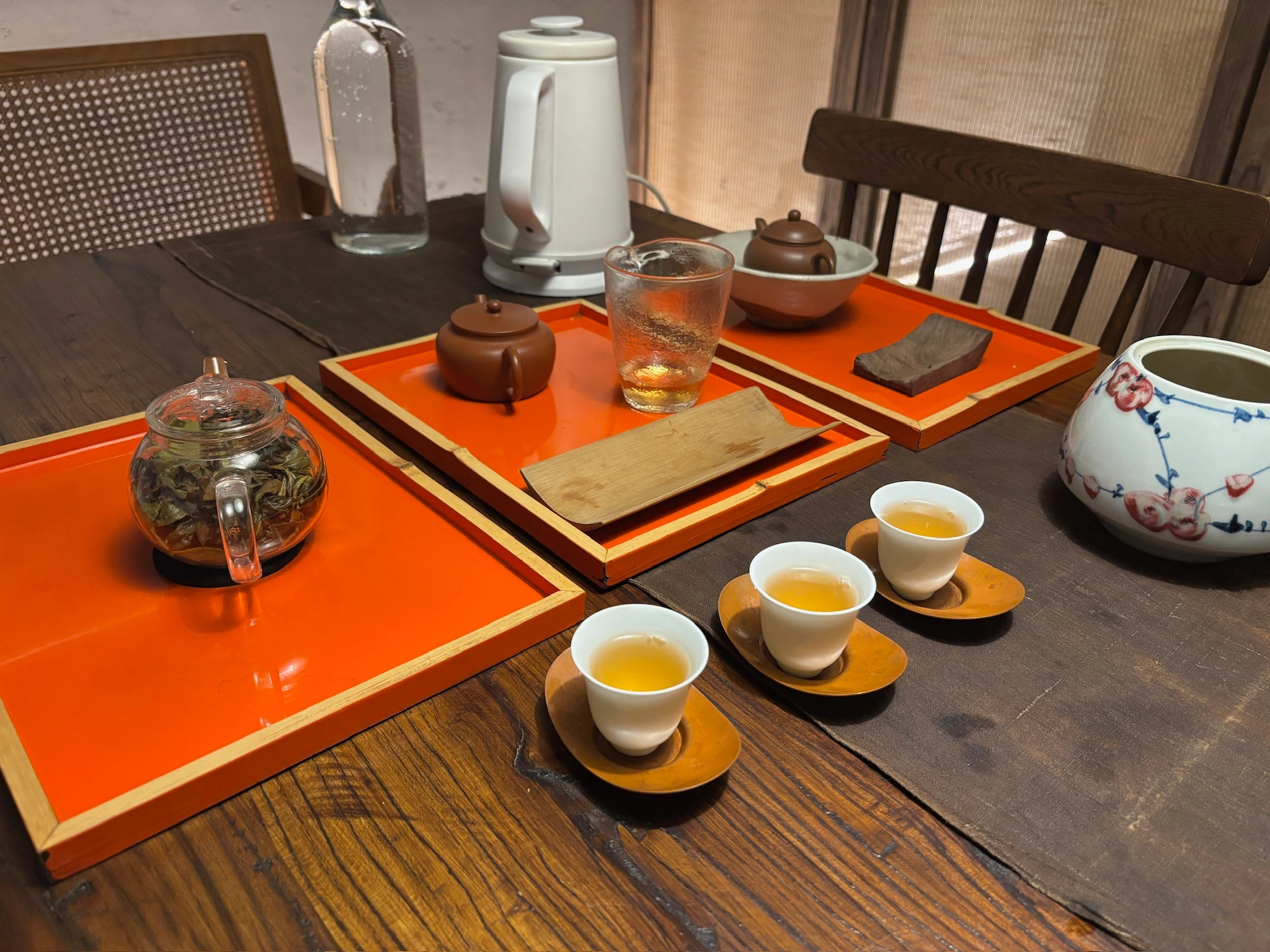
漳平水仙, 老班章古树生茶, and 金孔雀普洱熟茶 at 隐山修行
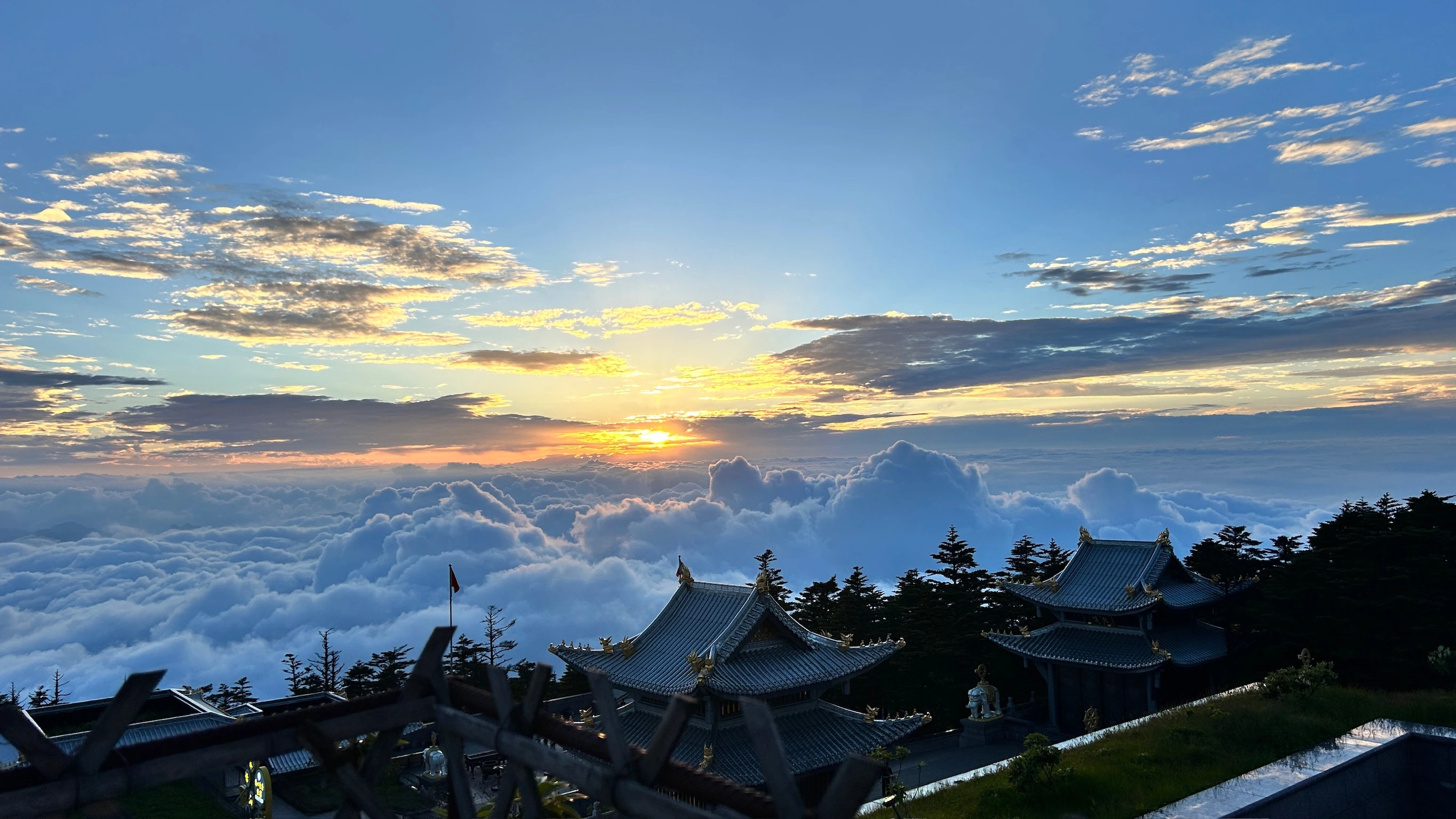
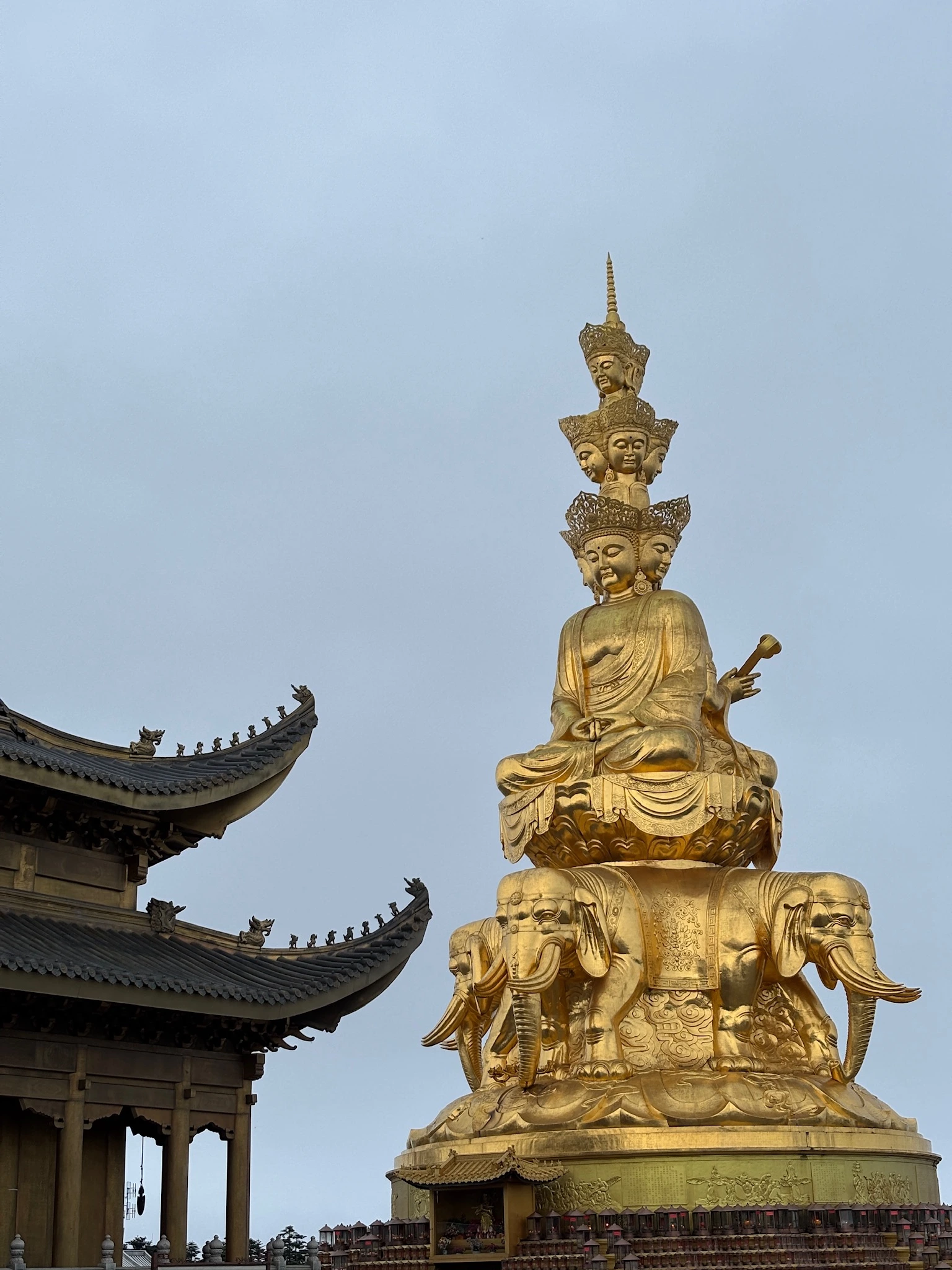
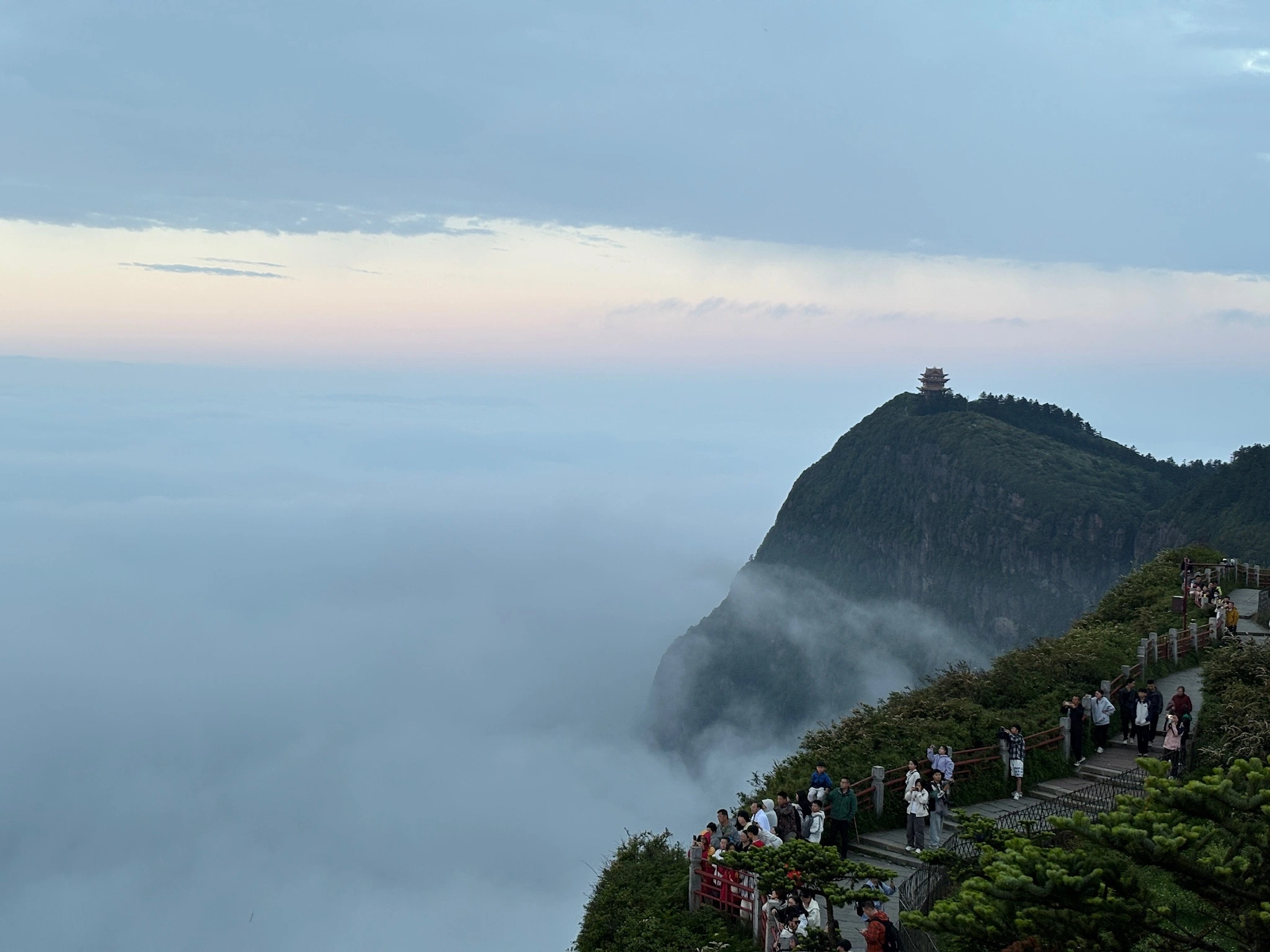
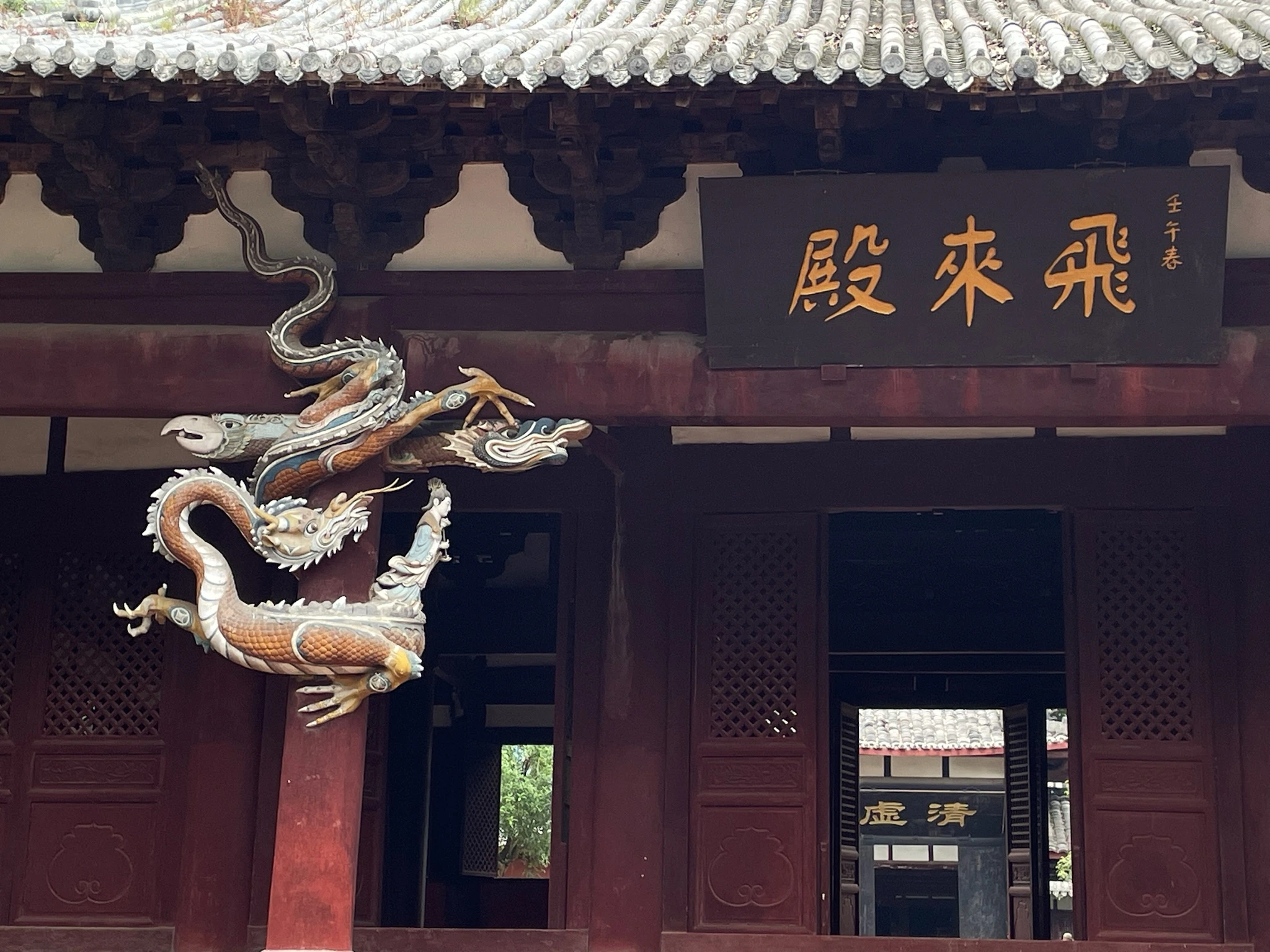
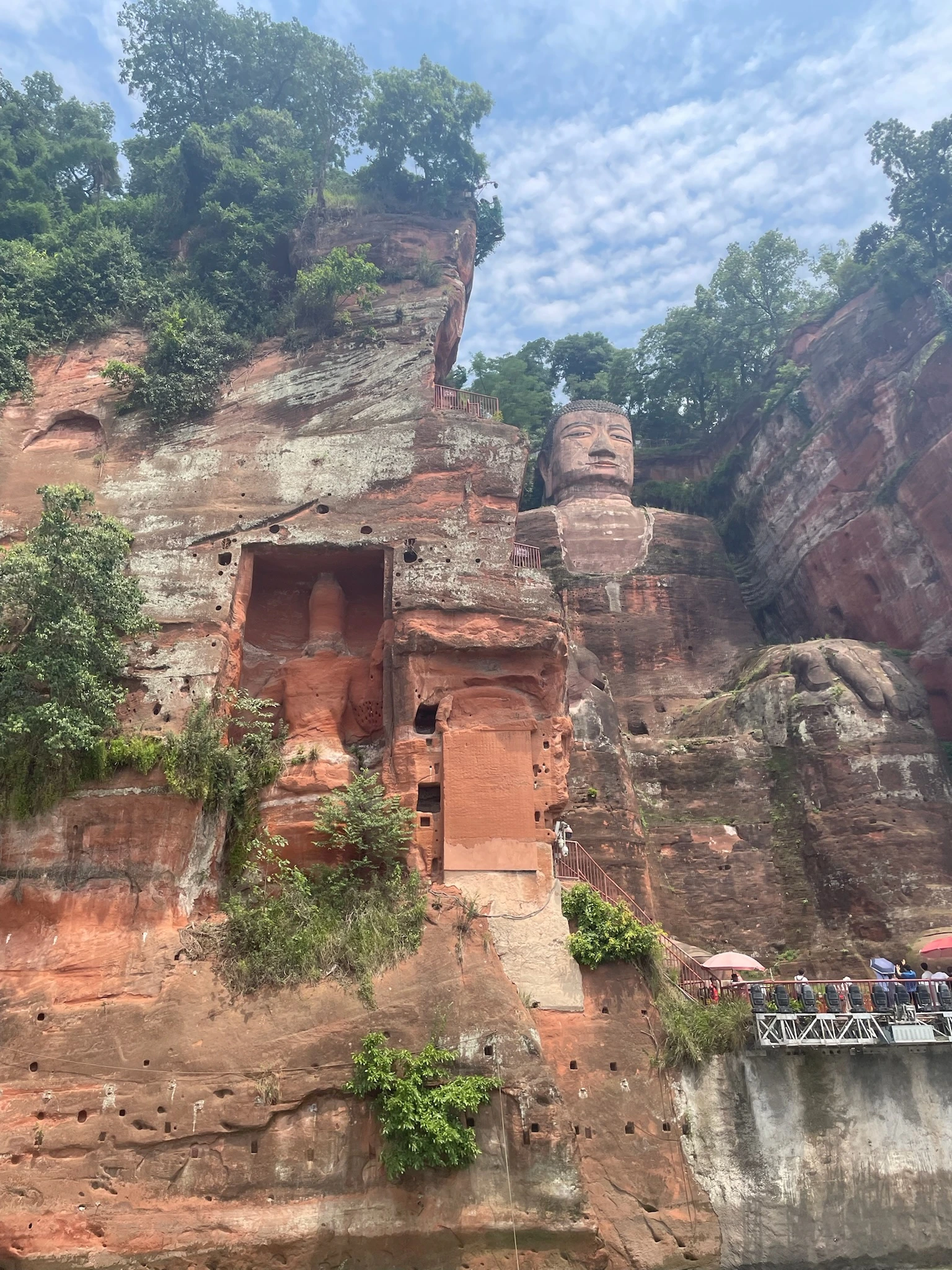
The only longer trip we managed to fit in was an overnight trip to 峨眉山, where I haven’t been probably since I was seven. We drove through 眉山, where we visited 三苏祠 (the childhood home of 苏东坡) and had some 东坡肘子 (a famous pork knuckle dish that 苏东坡 liked, among many other similar fatty pork dishes). We got to 峨眉山 early afternoon. We went to a few of the temples before taking the shuttle to 雷洞坪, where we then hiked up to 金顶, literally the “golden top” of the mountain (around 3000m altitude). We caught the sunset, and there were few enough people (very rare at these famous Chinese mountains) that you could still feel like you were really somewhere special. If my favorite parts of the US are along the Pacific Coast, my favorite parts of China are the mountains. We stayed the night at the top (Jasper and Calder experienced a somewhat cheaply built Chinese tourist-attraction-outside-cities hotel for the first time, which were a very big part of my growing up), slept mediocrely, then woke up at 5:30 to catch the sunrise. The sunrise wasn’t as good as the sunset: It was too crowded, and the sun never fully rose above the clouds, but watching the clouds part and come together was still nice. We soon hiked back down, saw some monkeys on the way, then drived to 乐山. There, we saw the big buddha from a boat on the river, as well as the junction where 岷江 and 大渡河 meet before flowing into the main stream of the Yangtze.
From Chengdu, Jasper and Calder flew to Japan, and I headed to Beijing for a few days. My family has always really liked 明十三陵 (the Ming Tombs), which is closer to where we live, in the north of Beijing. This time I was staying with a friend who lives in the south of the city, so we drove all the way to 清西陵 (the Western Qing Tombs) in Baoding, Hebei. The Qing tombs are laid out similar to the Ming tombs: The central tomb (usually the emperor who first chose the place) stands against the backdrop of a wall of mountains to its north and faces open land in the south, with two smaller peaks at its left and right, resembling a throne. The rest of the tombs are scattered in the crooks of the mountains nearby, all with their backs to the mountains and fronts to the shared open plain. The mountains here are a branch of the Taihang mountain range, which stretches from Beijing southward to form the natural border separating Shanxi to its west and Hebei + Henan on its right. Since the tomb complex is relatively far from the cities, it is much less popular than the Ming tombs. This meant two very nice things for me: one, it was basically empty when we went, thus a rare relaxing experience; and two, they are in less of a hurry to finish restoration. So several of the main halls still maintained parts of the original build (which is not crazy, since many of these were built in the last century), with the roof tiles still the original glaze and some of the indoor columns with their original decorative tiles. 慕陵 (tomb of 道光) had a beautiful main hall built entirely of 金丝楠木. 崇陵 (tomb of 光绪) was robbed in the civil war, so its underground chamber was excavated and open to the public. I always wonder what the state of archaeological conservation technology is and to what extent it’s a matter of funding; it would be cool if we can start safely excavating (or at least getting better scans) of these tombs within my lifetime.
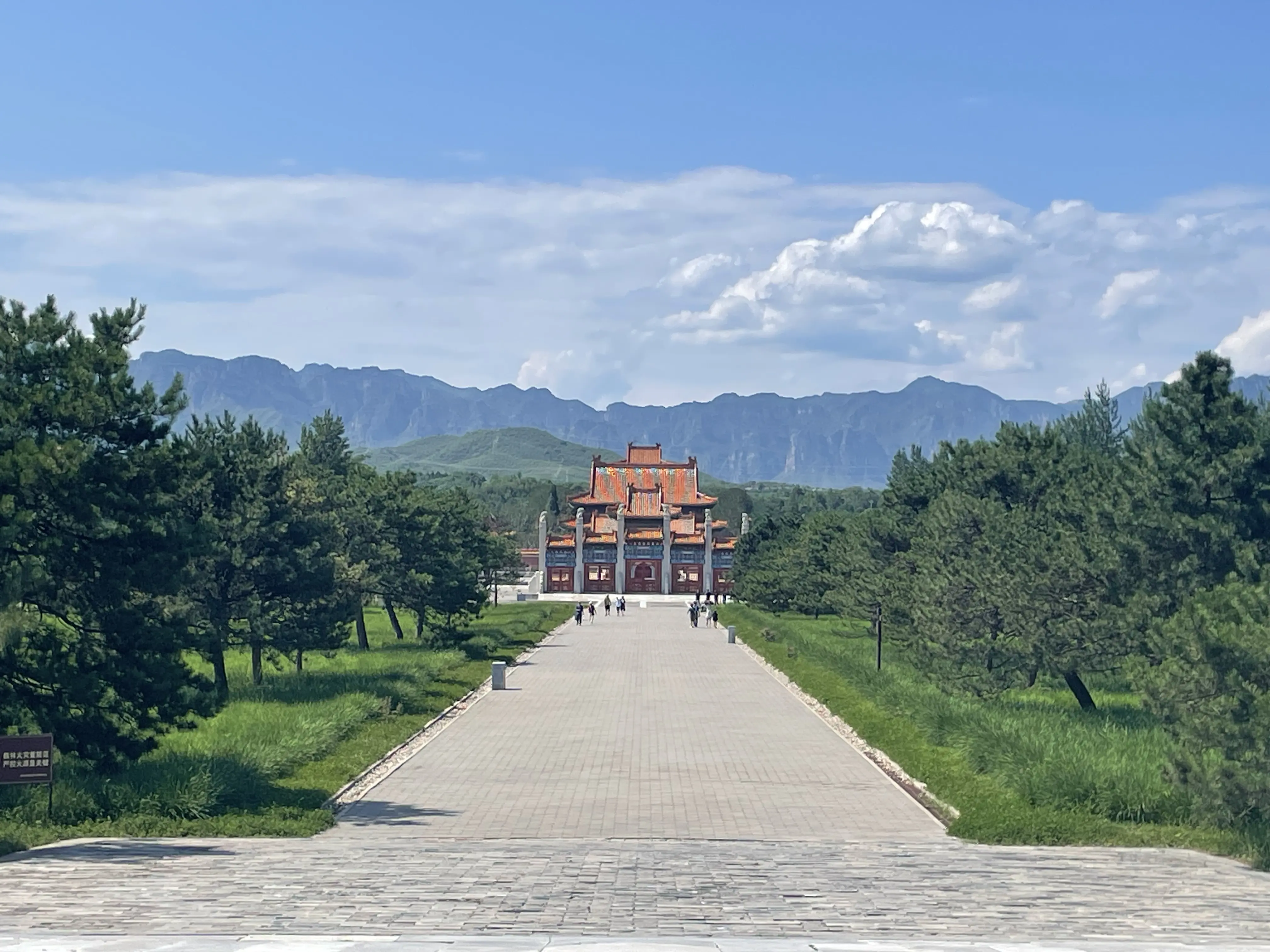
背倚永宁山的昌陵
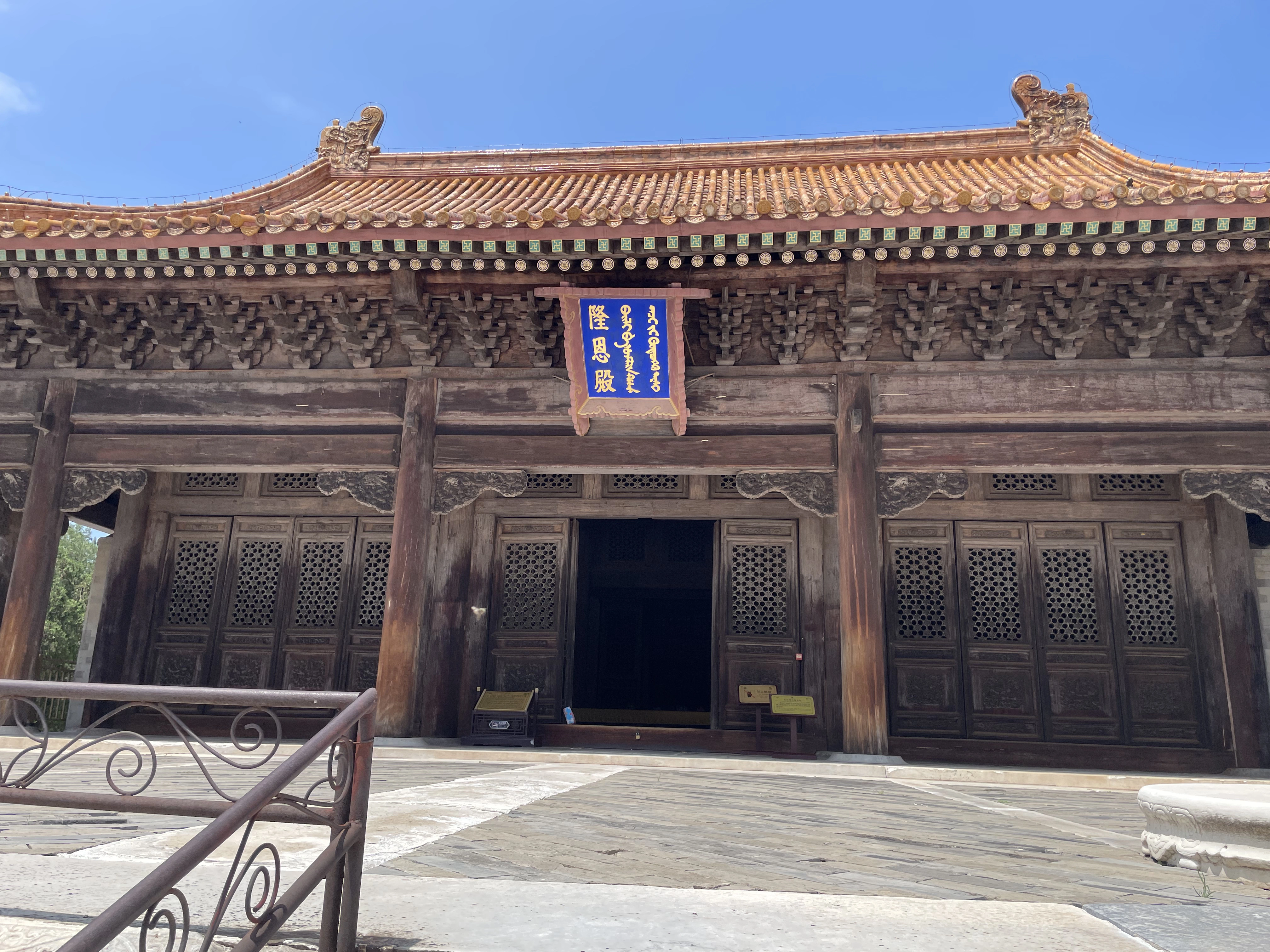
金丝楠木的隆恩殿
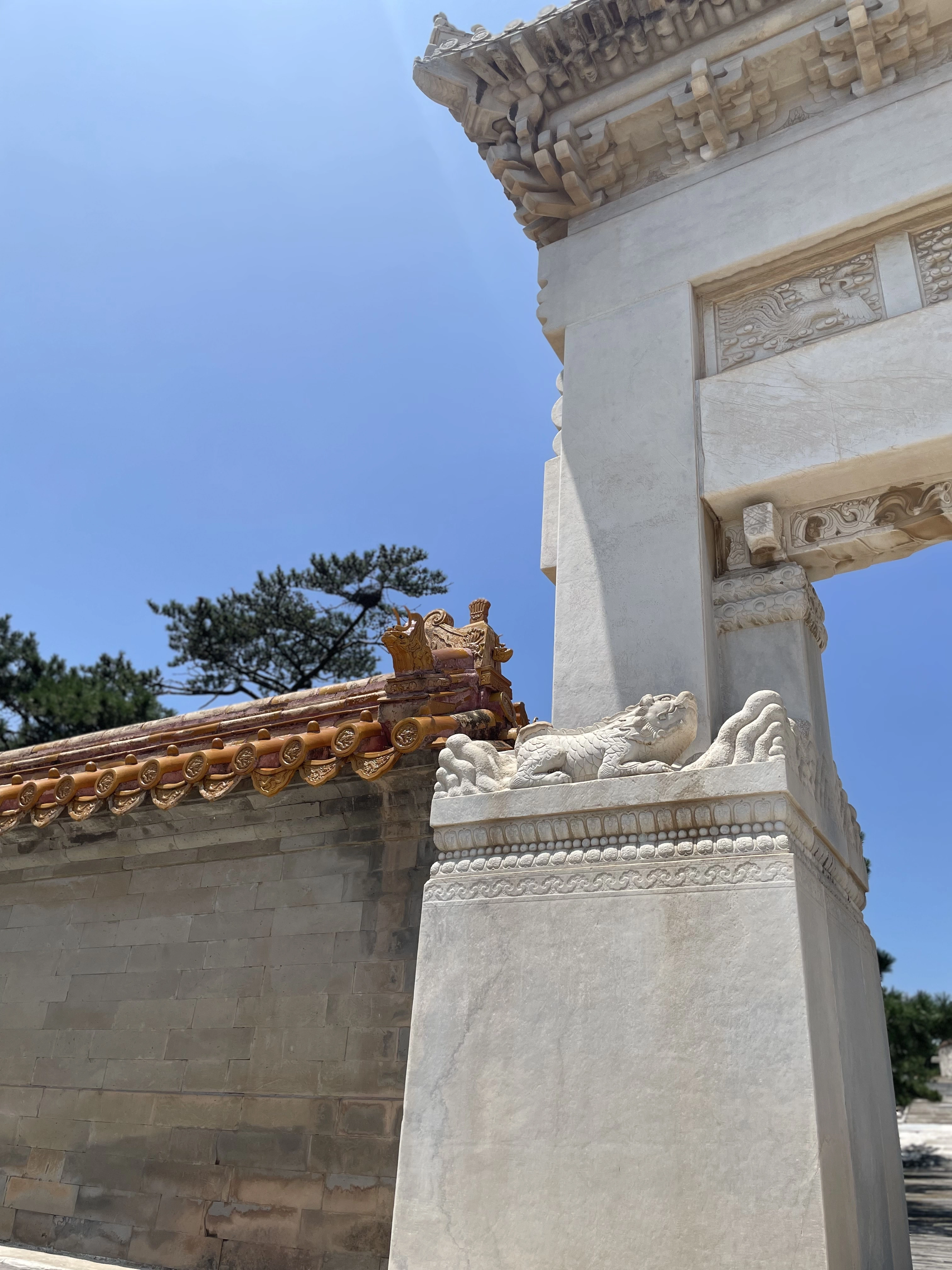
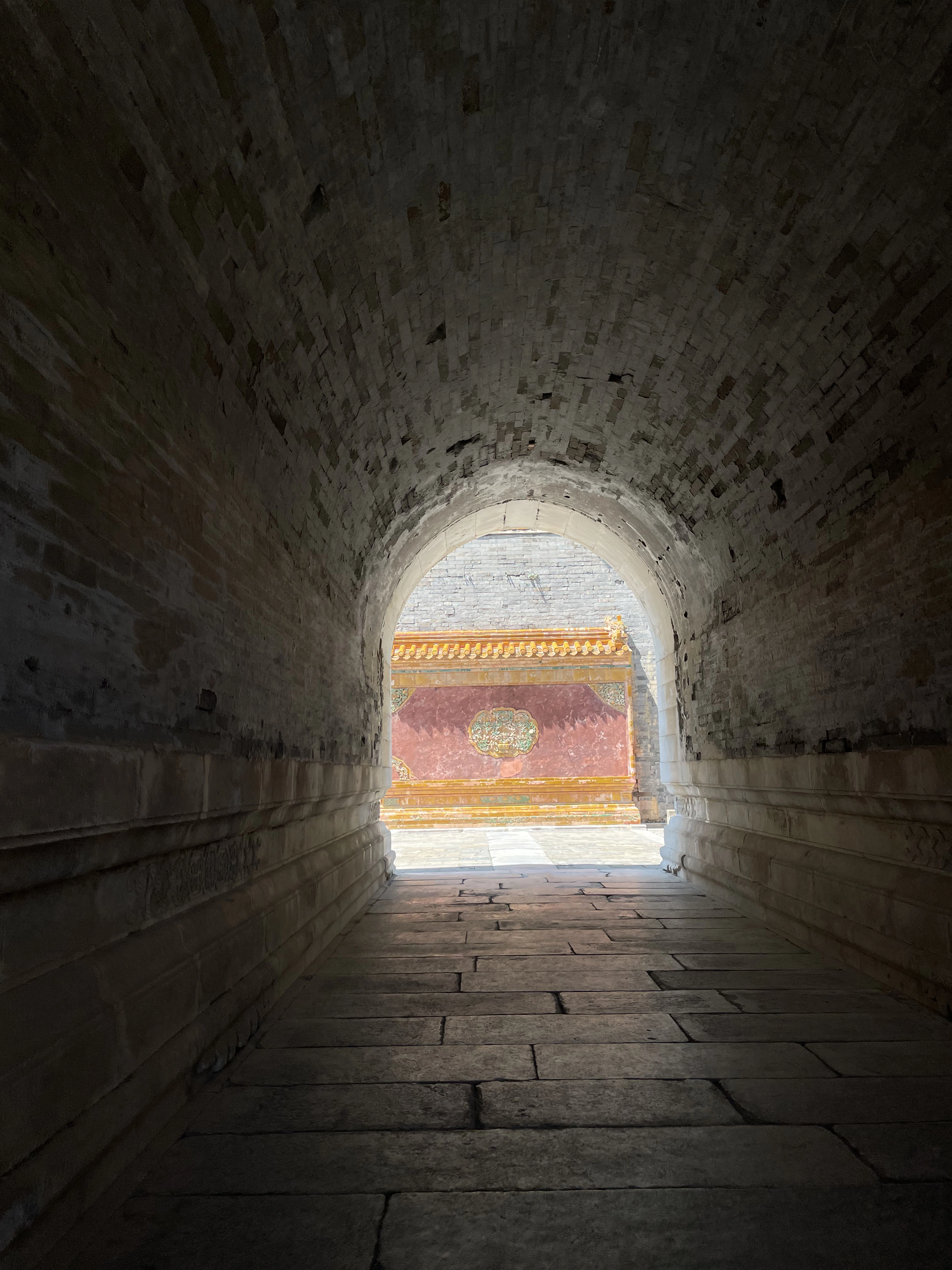
Parallel to the tunnel (right) below ground is usually the hallway that leads to the main gate of the underground chamber, which is directly under the red decorative wall
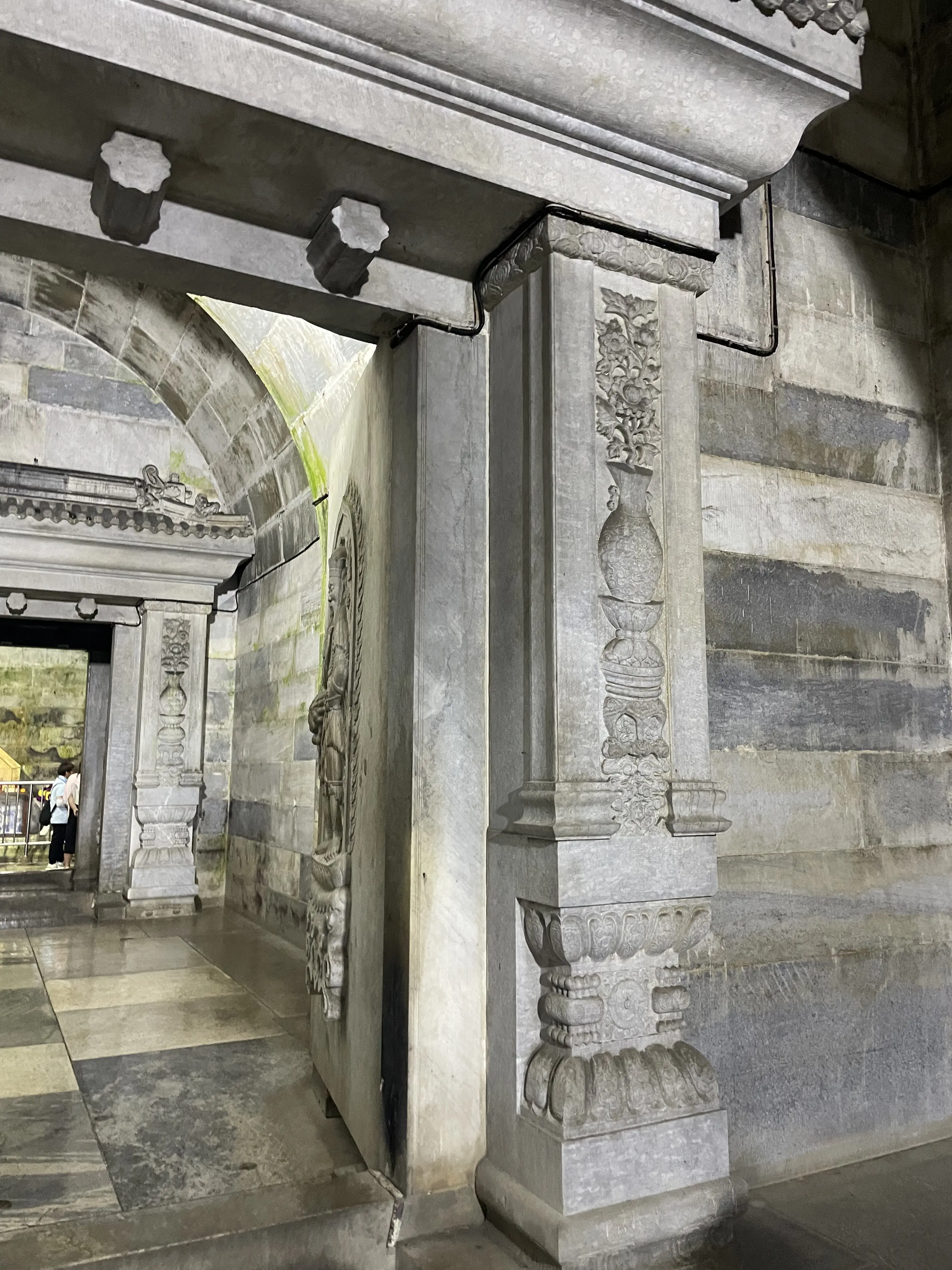
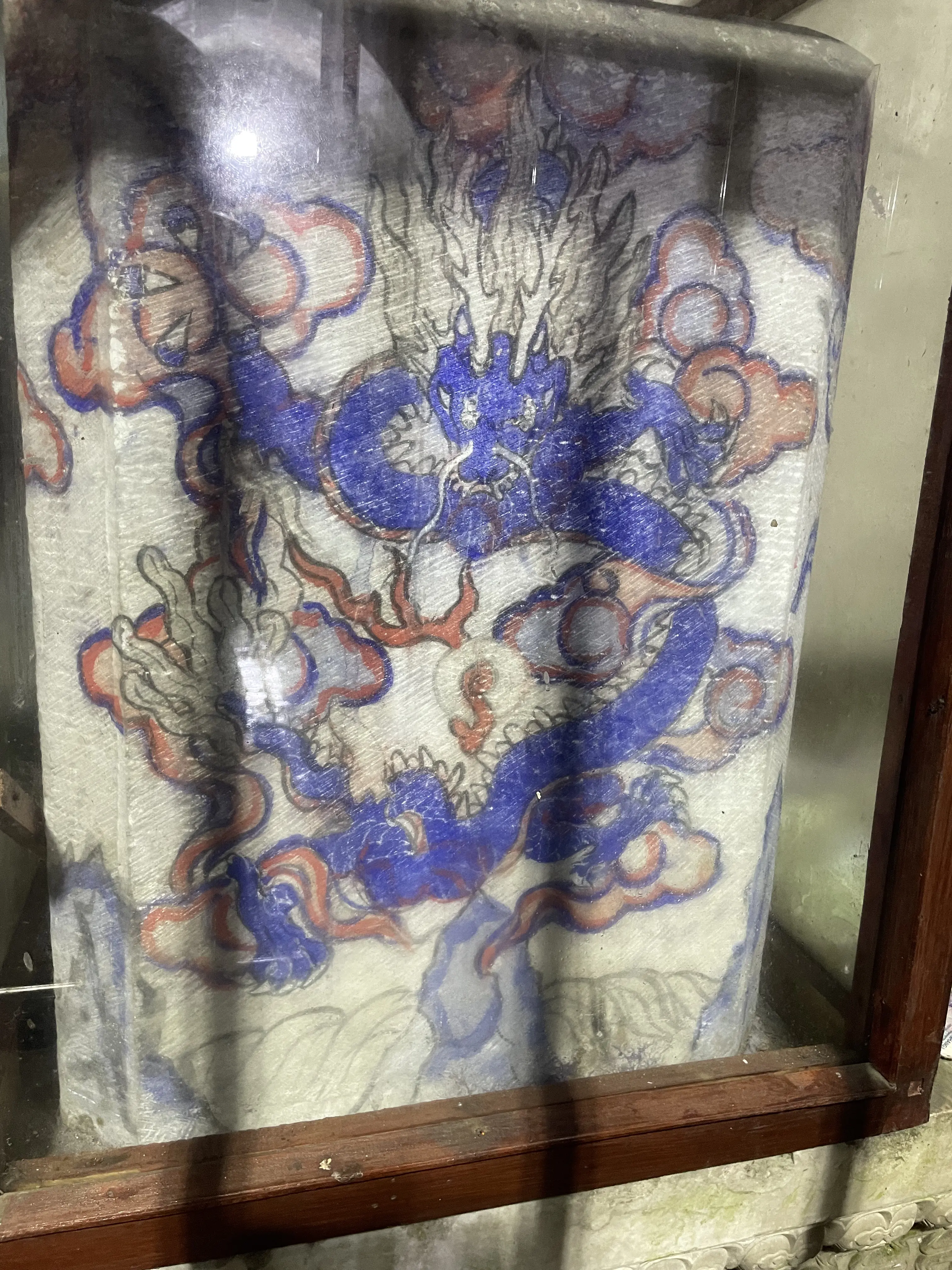
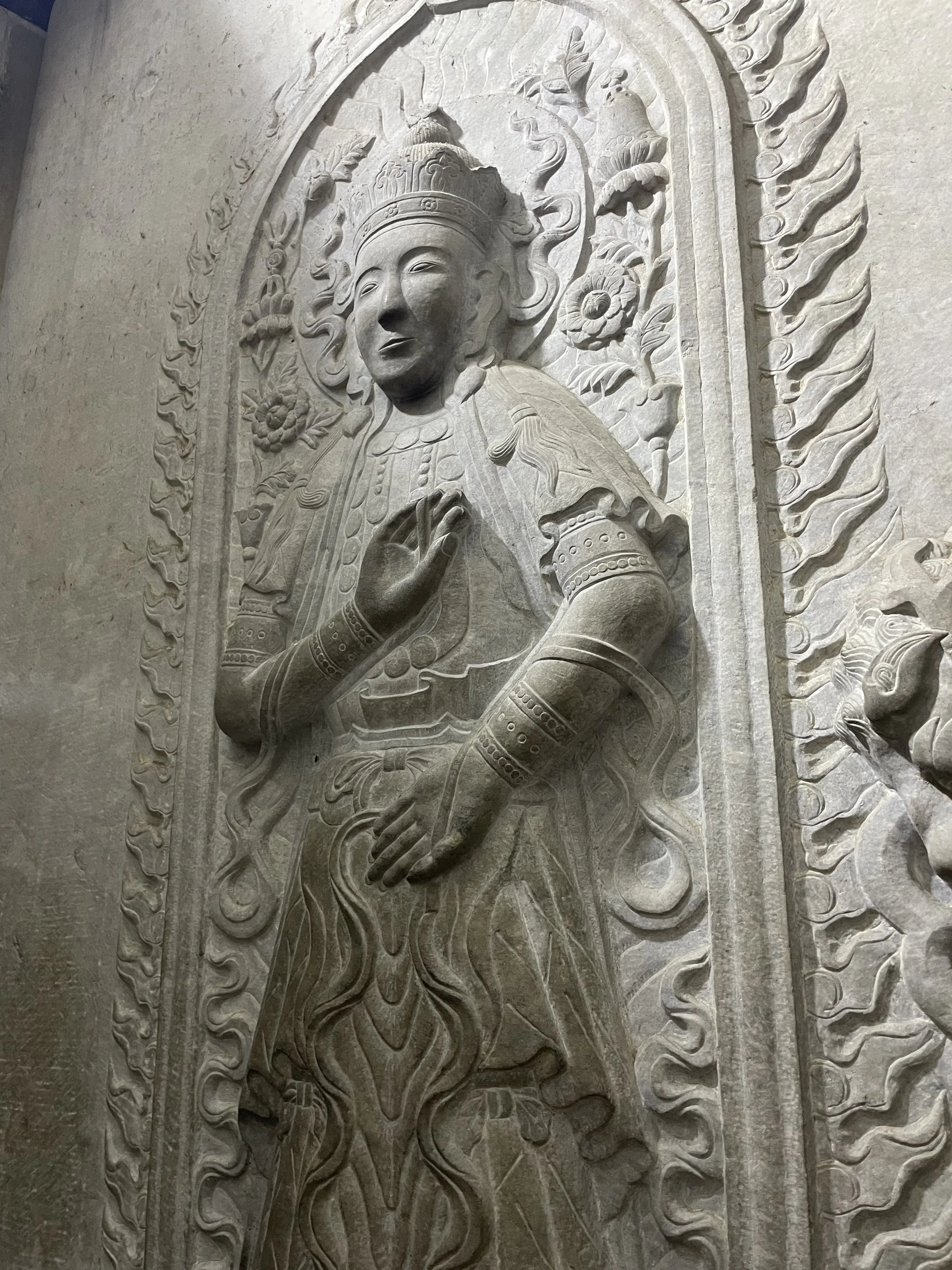
Underground chamber of 崇陵
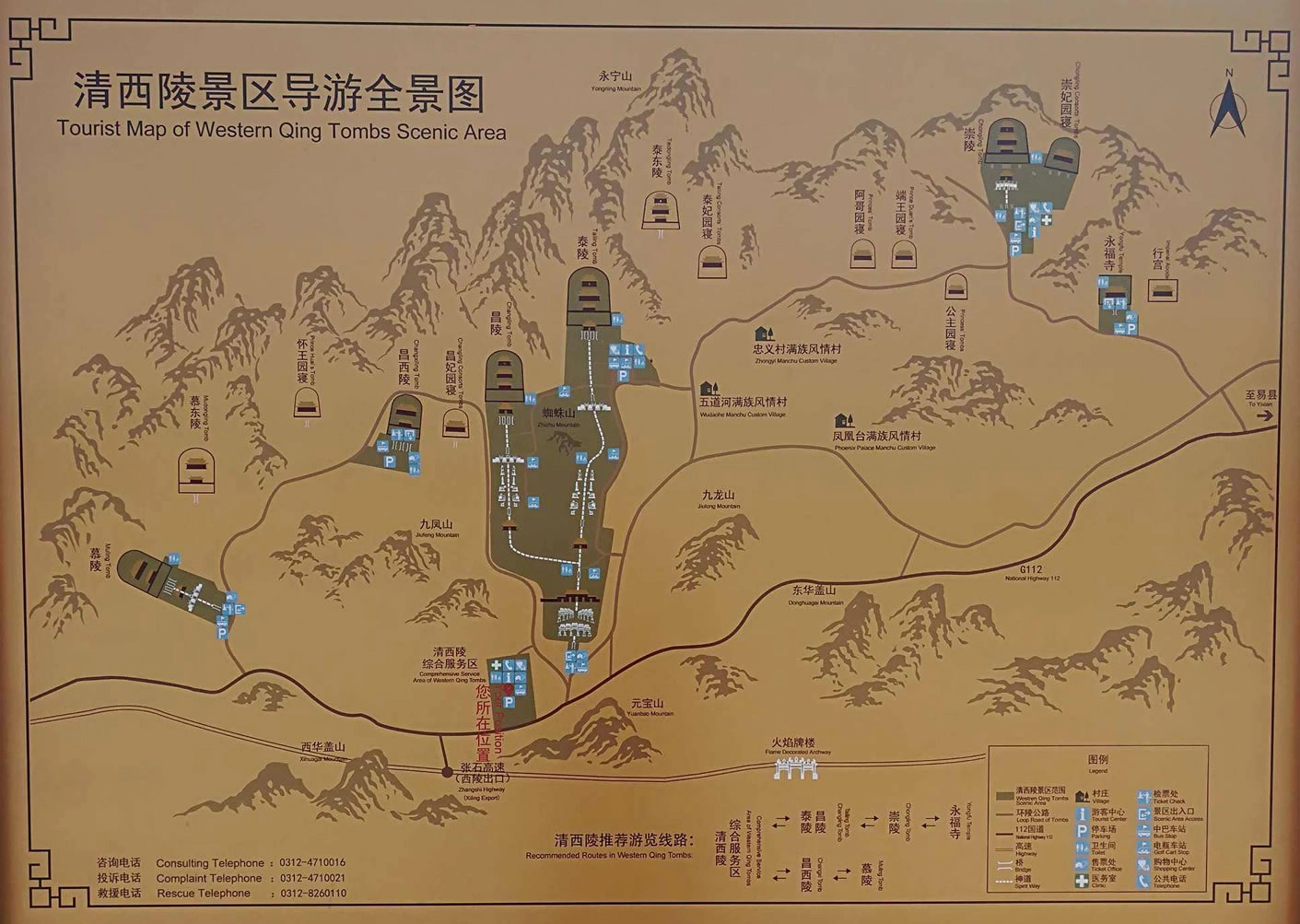
Map of the Western Qing Tombs
After my brief stay in Beijing, I was headed to Tokyo, commencing our ten-day Japan trip, which will be covered in part 2!
China 2025.6.5–2025.7.3